Arnold Ruge Quotes
France represents alone in Europe the pure and unalterable principle of human liberty. This nation friends a mission of cosmopolitanism.
Arnold Ruge, 1802-1880, German political philosopher & reformer, 1844, Quoted by Adam Zamoyski in Holy Madness: Romantics, Patriots, and Revolutionaries, 1776-1781
Sourced by: Eigen's Political and Historical Quotations


This was written by a French Journalist who had been assigned to America for 7 years when he wrote this in 1939. WWII was just breaking out in Europe.


The societies that had regularly produced the great advances in the sciences were those that allowed its citizens much liberty—liberty of thought, expression, association, etc. Where religious dogma controlled thought and expression, great scientific achievements were far less probable or less productive. Imagine, what Galileo might have achieved if the Church had not curtailed his efforts. When Islamic society was open, the sciences flourished whereas they were stifled in Christian Europe, but once Islam closed and liberty was no more, Islamic science degenerated to its low point of the 21st century.


From the latter part of the 20th century onward, religious nationalism was no longer a force for most religions and nations except Muslim countries. It was the only religion left where a large proportion of the adherents saw no distinction between the religion and the government. Nations that had separation of church and state were not conducive to the extreme fundamentalist form of Islam where the Secular Leader and the Religious leader was to be embodied as a single person. As a result Islamic religious nationalists argued for a Theocracy and at times fought for it with violent means. The secular government typically, to curtail the violence and prevent a religious takeover, often outlawed the extreme religious Islamic parties. While Aslan cites the Muslim Brotherhood failure in Egypt as a desirable outcome, the only way the other forces of Egyptian society could prevent the Islamists from taking over turning the country into a theocracy was to forcefully repress the extremists. The Turkish outcome was much better, but there was the threat of repression of the Justice and Development Party when it won a majority control of the government. There were explicit threats that if it tried to weaken the secular nature of the government as Ataturk had formulated it, the military would come “out of the barracks” and oust the government as they had done before. There were nations like China which persecuted religions such as certain forms of Christianity, but those religions were not fighting for religious nationalism. They only wished the freedom to practice their religion and had no program or theology that argued for Christianizing the government. The Tamil Hindus of Sri Lanka did not want a Hindu government and were perfectly free to practice their religion. The problem was that they felt that there was systemic social and economic discrimination against the Tamils and they fought for independence—not of a Hindu state, but of a secular, nondiscriminatory state of equal opportunity.


Trump was then President Elect who already had a large staff helping him fomake the transition. He still went off on his own with this state,ment whiich runs afoul of the Constitution which he would soon sware to defend when he took the Oath of Office. The Supreme Court had unequivocably ruled that the burning of the flag was a type of political speech and as such could not be curtailed or punished by the government. The penalty of a loss of citizenship was another constitutional thicket. In addition. in the hisoty of the country,, it had never been used as a punishment for breaking domestic law.


In September of 2005 a Danish Newspaper published some political cartoons showing the hypocrisy of some Muslims who use Islam to justify murder of innocents and terrorism. Months later, many in the Middle East protested vehemently and Muslim riots broke out and Danish boycotts ensued because the Prophet Muhammad's visage was depicted against Islamic tradition. Many Muslim leaders claimed that insulting religion was an “abuse” of freedom of speech including those from nations which regularly publish material that is virulent against Christians and Jews.
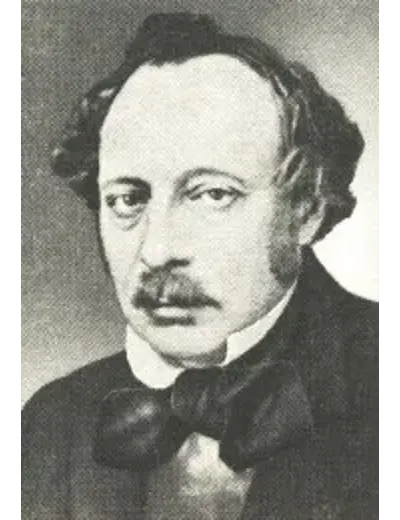
Arnold Ruge was a German philosopher and political writer. He was the older brother of Ludwig Ruge.
