Charles de Gaulle Quotes
France has lost the battle but she has not lost the war.
de Gaulle, Charles. Discours et messages, 1940-1946. Plon, 1970, p. 11.


The South could not replenish their lost arms and munitions nor could they replace most of the men wounded, killed or taken prisoner. The Union could do both. Therefore as long as the Union army inflicted casualties, it mattered little who won which battle as long as the fighting was in the South. This critical strategic reality was never appreciated by the Union Generals who were generally reluctant to take large casualties. When Grant and Sherman finally were able to set the strategy of attrition in operation, the Union actually won most of the battles though he and Grant took very high casualties. The casualties of the Confederates were generally higher but they did not have to be for the Union to win. The Civil War was a strategic form of suicide. Ironically, at a few points the rebellion might have succeeded because of the incompetent and timid Union military leadership at the beginning of the war.


He was not supported and a peace was negotiated with the British. De la Rey became a Senator and later was shot while trying to organize another rebellion.


He became one of the great heroes of the American navy and this statement is taught to every American sailor. Actually, although a very good Captain, in the battle with the Shannon, he made a number of mistakes which was unusual for him, but the Shannon won the battle. The American sailors did not give up the ship, but they were overcome with one of the highest casualty rates of any sea battle of the time. Had Lawrence lived—he dies of infection from his wounds—he probably would have faced a board of inquiry or a court martial, but his death turned him into an American hero. See {625129}. Commodore Perry, a friend of Lawrence, had “Don’t Give Up The Ship” sewn on to his battle flag, and the motto has been part of the United States Navy ever since.


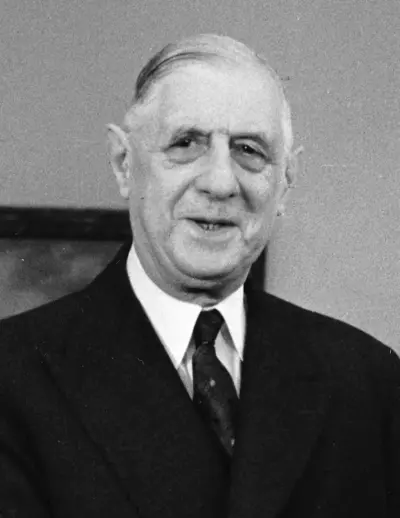
Charles André Joseph Marie de Gaulle was a French army officer and statesman who led Free France against Nazi Germany in World War II and chaired the Provisional Government of the French Republic from 1944 to 1946 in order to reestablish democracy in France. In 1958, he came out of retirement when appointed President of the Council of Ministers (Prime Minister) by President René Coty. He rewrote the Constitution of France and founded the Fifth Republic after approval by referendum. He was elected President of France later that year, a position to which he was reelected in 1965 and held until his resignation in 1969.
