John MacNeice Quotes
Forget the things that are behind. Forget the unhappy past. Forget the stories of the old feuds, the old triumphs, the old humiliations.
He was one of the few Irish clerics who urged a reproachment between Catholics and Protestants.
John MacNeice, 1866–1942, Irish Protestant Bishop of Down, Connor and Dromore, 1935
Sourced by: Eigen's Political and Historical Quotations

For centuries whites had dominated and abused the Blacks of South Africa. When the Black majority finally gained power, there were many calls for retribution and justice. However, under Mandela’s influence, South Africa made one of the most successful transitions of power to the majority who had been oppressed. The concentration on the future made South Africa the most successful country in Africa and a model for the world. See {633690} for another of his implementing statements of this principle.


This old proverb, commonly uttered in Russia and Slavic countries, in part, explains why Russians, Serbs, and others of the area seem so mired in the past.
The papyrus appears to be an instruction booklet for government officials.

This statement was like many of the Yogi Berra quotations, with few understanding the point Bush was trying to make.


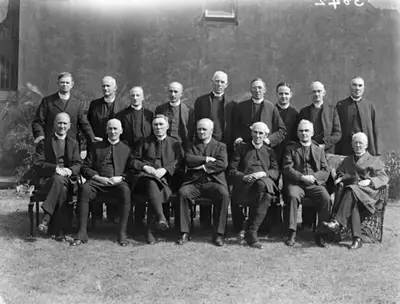
John Frederick MacNeice (1866–1942), was born at Omey, Co. Galway, to a Protestant family which claimed descent from the kin of the early Irish saint MacNissi. Opting for the Church of Ireland ministry he served notably as rector of Carrickfergus, Co. Antrim and afterwards as bishop of Cashel, Emly, Waterford and Lismore (1931–1934) and until his death as bishop of Down, Connor and Dromore (1934–1942). MacNeice is well known for his symbolic opposition to the Partition of Ireland (accepted as a political reality): hence his refusal to allow the Union Flag to be laid on Carson's grave at his funeral in St Anne’s Cathedral, Belfast in 1935. MacNeice was twice married. One of his sons by his first marriage was the poet, Louis MacNeice.
