Martin Luther Quotes
For where God built a church, there the Devil would also build a chapel…In such sort is the devil always God's ape.
Martin Luther, Colloquia Mensalia, ch. 2, 1566.


English history has been replete with Catholic-Protestant conflict and because of the British Empire, the British historians were very familiar with the Islamic conflict with Christianity, Judaism, Hinduism, and other religions. Toynbee was very worried about the future religious struggles and he turned out to be right. Freedom isi amenable to different interpretations and compromise. Religion also has different interpretations, but many of the religious fundamentalists see compromise as an offence to God and his word. So religion is less amenable to political, civil or social structuring and compromise.

Williams was a minority voice throughout most of the world on this point. Even in modern times there are many civil and religious authorities do do not agree. The belief of God’s impotence and the need for the “sword of steel” seem so contradictory yet it persists even to modern times.

This Sura of the Koran warns the faithful that the non-Muslims of the world have as a major objective the Conversion of Muslims. While this was and has been the case in times past starting even before the Crusades, many Christians felt it as an obligation to either convert the Muslims or to kill them. In modern times there have been Christian missionaries who have had an objective of converting Muslims, but no Christian government has had that as a policy for a long time now. But most Muslims are told this is so today and the Koran warned of this. The result is that many Muslims—particularly those who have not had much contact with other religions—believe that because of this, they will be forever fighting heretics like Christians. For this reason, Islam’s future is under attack.


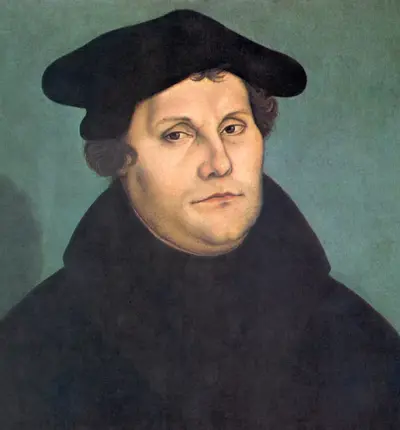
Martin Luther, O.S.A. was a German professor of theology, priest, author, composer, Augustinian monk, and a seminal figure in the Reformation. Luther was ordained to the priesthood in 1507. He came to reject several teachings and practices of the Roman Catholic Church; in particular, he disputed the view on indulgences. Luther proposed an academic discussion of the practice and efficacy of indulgences in his Ninety-five Theses of 1517. His refusal to renounce all of his writings at the demand of Pope Leo X in 1520 and the Holy Roman Emperor Charles V at the Diet of Worms in 1521 resulted in his excommunication by the pope and condemnation as an outlaw by the Holy Roman Emperor.
