Tertullian Quotes
For what war should we not be fit and eager, even though unequal in numbers, we who are so willing to be slaughtered-if, according to that discipline of ours, it was not more lawful to be slain than to slay?
Tertullian. Apology. The Ante-Nicene Fathers, Vol. 3, edited by Alexander Roberts and James Donaldson, Christian Literature Publishing Company, 1885, p. 45.


There was a Sedition law which made it a Federal felony to encourage anyone not to join or support the military during the First World War. The Socialist Politician and Candidate for President, Eugene Debbs and others, were jailed for less seditious statements. Helen Keller was a remarkable woman who was blind and deaf, and yet she became a great orator and social reformer. The administration died not relish the reaction if they put this popular, blind, deaf woman in jail so she was never charged. The law of course was unconstitutional, but it took years to reach that determination. Until then, the Sedition Act was one of the worst examples of infringement in American history since the original Alien and Sedition Acts of John Adams.

Theodore Roosevelt was the Presidential nominee. Johnson was a leader of some members of Congress some of whom were extreme isolationists and some of whom were Nazi sympathizers and Hitler admirers. When the Japanese attacked Pearl Harbor later that year, Germany, fulfilling its treaty with Japan, declared war on America, Johnson’s group no longer mattered. Before WWII most Republicans were opposed to Defense Spending and accused the Democrats of being war hawks. After WWII, they flip flopped and became more hawkish than the Democrats who they accused of being soft on defense for years thereafter. See {631380} for President Roosevelt’s different view.


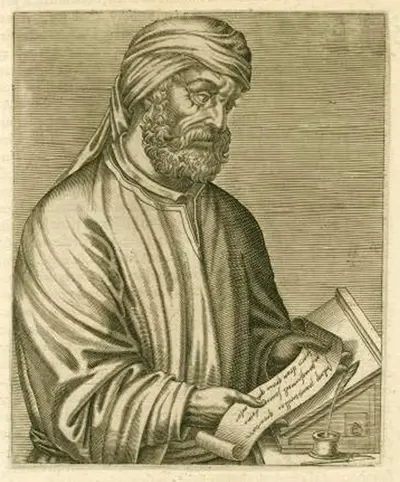
Tertullian (/tərˈtʌliən/; Latin: Quintus Septimius Florens Tertullianus; c. 155 – c. AD 220) was a prolific early Christian author from Carthage in the Roman province of Africa. Of Berber origin, he was the first Christian author to produce an extensive corpus of Latin Christian literature. He was an early Christian apologist and a polemicist against heresy, including contemporary Christian Gnosticism. Tertullian has been called "the father of Latin Christianity" and "the founder of Western theology."
