Friedrich Nietzsche Quotes
For such is man: a Theological Dogma might be refuted to him a thousand times - provided however, that he had need of it, he would again and again accept it as true. Belief is always most desired, most pressingly needed where there is a lack of will. Fanaticism is the sole "volitional strength" to which the weak and irresolute can be excited, as a sort of hypnotising of the entire sensory-intellectual system.
Nietzsche, Friedrich. The Gay Science. Translated by Walter Kaufmann, Vintage Books, 1974, p. 288.


The Illuminati was a secret society. At the time, anyone who differed with the Church on issues of philosophy, ethics or religion could be tortured and burned at the stake, and anyone who criticized the Monarchy could be tortured and hung or beheaded. The result was the concept of a secret society of which the Illuminati was one.


He was an overt atheist; there were many non believers in Europe at the time but few were overt. He also wrote under the name of Jean Baptiste de Mirabaud.

This was not only the case in 1852, but also true 150 years later. The only difference is that there is much more proof of Evolution, and there is a much smaller proportion of the population that questions Evolution as the fundamental mechanism by which all species have developed.


Jorge Mario Bergoglio

Spinoza’s ideas were considered so radical and dangerous that he was the only man in history who was excommunicated by the Catholics, the Jews and the Muslims.

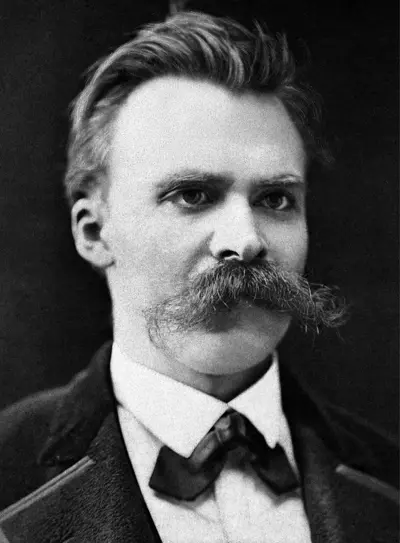
Friedrich Wilhelm Nietzsche was a German philosopher, cultural critic, composer, poet, writer, and philologist whose work has exerted a profound influence on modern intellectual history. He began his career as a classical philologist before turning to philosophy. He became the youngest person ever to hold the Chair of Classical Philology at the University of Basel in 1869 at the age of 24. Nietzsche resigned in 1879 due to health problems that plagued him most of his life; he completed much of his core writing in the following decade. In 1889, at age 44, he suffered a collapse and afterward a complete loss of his mental faculties. He lived his remaining years in the care of his mother until her death in 1897 and then with his sister Elisabeth Förster-Nietzsche. Nietzsche died in 1900.
