Max von Laue Quotes
For both reasons, owing to the thermal motion and to the working together of various wavelengths, factors arise which, in a similar manner to the structural factor, exert some influence upon the brightness of the interference points but not upon their location.
Laue, Max von. "Concerning the Detection of X-ray Interferences." Nobel Lectures, Physics 1901-1921, Elsevier Publishing Company, 1967, pp. 347-355.


In stark contrast to a modern President, TR a great writer, drafted all his own important speeches and other material and used his staff to react and edit—just the opposite of most Presidents today.

McPherson was the first woman who preached over the radio. With the advent of radio for all purposes, stations were being erected all over the country and began to interfere with each others broadcast. Herbert Hoover saw this as a Federal Problem and authorized his administration to regulate the power and wavelength frequencies that stations could use for their broadcasts. McPherson had built the Angelus Temple in Echo Park with two huge radio towers but she was broadcasting “the word of God” and did not want to be restricted to broadcasting on a single frequency. She and others, even today, see any regulation of a religious activity as an impingement of freedom of speech and freedom of religion.


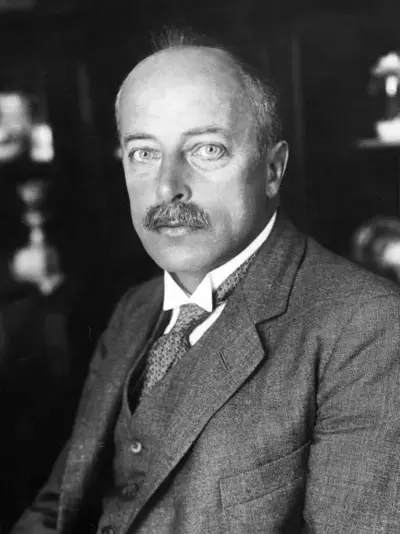
Max Theodor Felix von Laue was a German physicist who received the Nobel Prize in Physics in 1914 for his discovery of the diffraction of X-rays by crystals. In addition to his scientific endeavors with contributions in optics, crystallography, quantum theory, superconductivity, and the theory of relativity, he had a number of administrative positions which advanced and guided German scientific research and development during four decades. A strong objector to Nazism, he was instrumental in re-establishing and organizing German science after World War II.
