Niccolo Machiavelli Quotes
For a prince should have two fears: one, internal concerning his subjects; the other, external, concerning foreign powers. From the latter he can always defend himself by his good troops and friends; and he will always have good friends if he has good troops.
Machiavelli, Niccolò. The Prince. Translated by W. K. Marriott, J. M. Dent & Sons, 1908, p. 143.


Washington, although the presiding officer of the Constitutional Convention, said almost nothing for such was the respect for him that he cou;d sway almost any issue. But the absurdity of limiting the size of the American Army was too much for him, and his clever way of phrasing his concern ended discussion of that idea without any ill feelings.

During her adult life, she was the de facto ruler of China. This quotation is very important because it gives us an important insight into Chinese motives and historical drivers. The first reason is something almost all countries and cultures can identify with, but the second--to avoid being looked down—was just as important. Americans are relatively uncaring what the citizens of other countries think about them, but the Chinese do. So do other nationalities and cultures like the Arabs, the Iranians, many of the South American cultures. Often it takes on a different world like “dignity” or “respect”.
China, which had been one of the strongest and most modern nations in the world for 1000 years had lapsed into decay and though a huge nation, rich in resources, with more people than any other had been eclipsed by Japan, America and Europe. Cixi was determined to remedy that, and to a great extent started China on the road to modernization which would take over 100 years more.


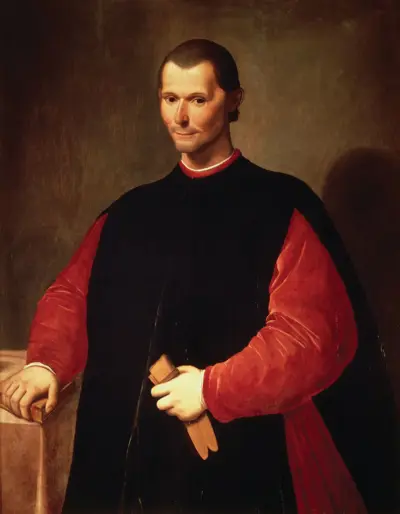
Niccolò di Bernardo dei Machiavelli was an Italian Renaissance diplomat, philosopher and writer, best known for The Prince (Il Principe), written in 1513. He has often been called the father of modern political philosophy and political science.
