Horace Quotes
Fierce eagles breed not the tender dove.
Horace. Odes and Epodes. Translated by Niall Rudd, Harvard University Press, 2004, Odes, bk. 4, ode 4, lines 31-32, p. 235.


The Eugenics Movement, which grew quite popular for a while, tried to improve the race of man, not by improving individual people or even a generation of people, but of selective and restrictive breeding of humans. The coercion and bias associated with it caused one of the worst violations of human rights in American History, and then was picked up by Adolf Hitler who carried the ideas to one of the worst atrocities in human history—the murder of “inferior races” so that they could not breed, thereby in their warped theory developing a super race.
He was restating the argument of the Eugenics Movement but was a critic of many parts of it. This Movement, which grew quite popular for a while, tried to improve the race of man, not by improving individual people or even a generation of people, but of selective and restrictive breeding of humans. The coercion and bias associated with it caused one of the worst violations of human rights in American History, and then was picked up by Adolf Hitler who carried the ideas to one of the worst atrocities in human history.


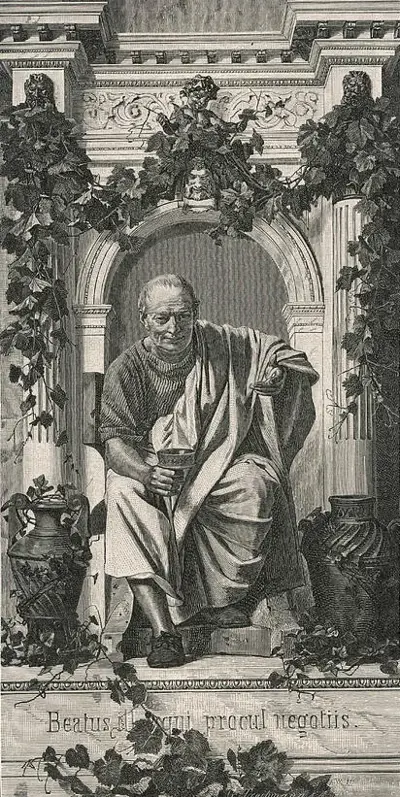
Quintus Horatius Flaccus, known in the English-speaking world as Horace (/ˈhɒrɪs/), was the leading Roman lyric poet during the time of Augustus (also known as Octavian). The rhetorician Quintilian regarded his Odes as just about the only Latin lyrics worth reading: "He can be lofty sometimes, yet he is also full of charm and grace, versatile in his figures, and felicitously daring in his choice of words."
