Max Stirner Quotes
Feuerbach ... recognizes ... "even love, in itself the truest, most inward sentiment, becomes an obscure, illusory one through religiousness, since religious love loves man only for God's sake, therefore loves man only apparently, but in truth God only." Is this different with moral love? Does it love the man, this man for this man's sake, or for morality's sake, for Man's sake, and so-for homo homini Deus-for God's sake?
Stirner, Max. The Ego and His Own. Translated by Steven T. Byington, Benjamin R. Tucker, 1907, p. 385.


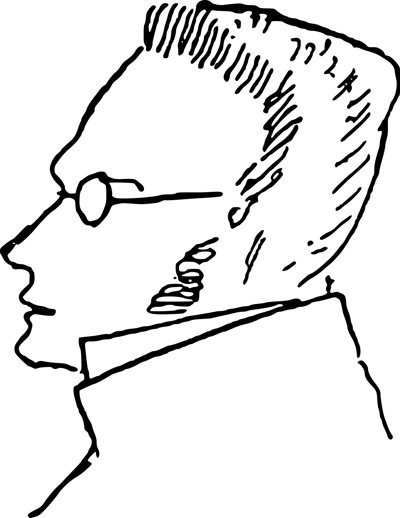
Johann Kaspar Schmidt, known professionally as Max Stirner, was a German post-Hegelian philosopher, dealing mainly with the Hegelian notion of social alienation and self-consciousness. Stirner is often seen as one of the forerunners of nihilism, existentialism, psychoanalytic theory, postmodernism and individualist anarchism.
