Ernest Hemingway Quotes
Ezra was right half the time, and when he was wrong, he was so wrong you were never in any doubt about it.
Hemingway, Ernest. A Moveable Feast. Charles Scribner's Sons, 1964, p. 107.


The United States along with France, Britain and other Western nations maintained an arms embargo against both sides of the Spanish Civil War. However, Italy and Germany, not only shipped arms to the Nationalists but sent planes and crews to fight against the Republicans. Bowers warned that the freely elected Republican government would not be able to hold out against the Fascist attacks of two outside countries and the nationalists in Spain. Further that the arms embargo would force the Republicans politically into the hands of the Russians who became the only possible sourced of arms. The American right wing was opposed to involvement in such foreign disputes. After the Fascists took over Spain, the lesson was not lost on Roosevelt in terms of arms to Great Britain when WWII broke out.

The public and the educators were outraged and no sooner was the school closed, than immigration had people moving to New York created a need for more high school capacity. La Guardia was one of the few politicians who tended to admit his mistakes, go on and fix them and then do some other “good stuff.” Others argue that he was so popular so he could admit to anything and get away with it. This was perhaps true, but one of the reasons for the great popularity was extreme honesty and candor and a minimum of hypocrisy.

He was the leader of the team that followed to invading troops into Iraq to find the nuclear and other WMDs that the CIA had said were deployed and ready to be used. They found none. Worse for the CIA, there were not even any development programs ongoing. The CIA Director was furious with Kay for admitting the CIA gross error. Kay was given minor assignments thereafter even though he was the best WMD analyst we had.

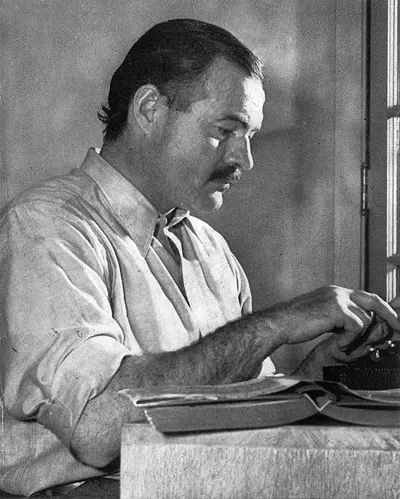
Ernest Miller Hemingway was an American novelist, short-story writer, journalist, and sportsman. His economical and understated style—which he termed the iceberg theory—had a strong influence on 20th-century fiction, while his adventurous lifestyle and his public image brought him admiration from later generations. Hemingway produced most of his work between the mid-1920s and the mid-1950s, and he was awarded the Nobel Prize in Literature in 1954. He published seven novels, six short-story collections, and two nonfiction works. Three of his novels, four short-story collections, and three nonfiction works were published posthumously. Many of his works are considered classics of American literature.
