Moshe Kahlon Quotes
Every terrorist should know before they hurt a Jew that his family will also be hurt.
Kahlon, Moshe. Quoted in "Ministers Call for Death Penalty for Halamish Terrorist." The Jerusalem Post, 23 July 2017.


He was a German physician and explorer who had converted to Islam. Nonetheless, he was caught up in the Arab uprising of the Madhists, who had conquered much African territory.

Darwish’s father, a Colonel in the Egyptian Army, was assigned by Nasser to Direct the Intelligence Operations for the Palestinian Terrorists in Gaza. After many Israelis were killed, the Israeli Defense forces targeted the Colonel and killed him. Nasser’s concept of revenge was to kill any Jews, anywhere, not the Jewish soldiers who had retaliated against his soldiers.


The Nazis and most of the Arabs were allies in WWII. The Jews of Palestine—although they were opposed to many of the British policies regarding Palestine—were active in the Allied cause contributing units to the British Army. Although the Germans were brutal to civilians, murdering millions, they refrained from public pronouncements or exhortations to kill civilians in most cases. The Arabs did not. The Mufti was actually given the rank of General in the Nazi SS and had his own SS unit. In this despicable exhortation he actually uses a concept and wording from the Koran. See {584355}. This quotation is important in that it refutes a common claim by some Palestinians that it was only the Germans who were responsible for the Holocaust and the post war Jewish Refugee problem and that the Palestinians had to bear the price rather than place Israel in Europe. This quotation and the other by the Grand Mufti prove that Palestinians were not only complicit in persecution of Jews but took a leadership and advocacy role.


Sherman, one of the most gifted generals of the Civil War. He hated the cruelty of war and the Civil War in particular as he had specifically warned his Southern friends ahead of time about what war would bring. See {585882}. Sherman was one of the first American military men to look at war without any of the romantic, patriotic, noble attributes that most others did.

He controlled a Shiite political party with its own armed militia.

After the Russian Revolution he fought both the Whites and the Reds. He finally lost to the Reds and was banished. Both the Red and White armies went on pogroms and attacked Jews. The Whites were the worst and did so with the complicity of their officers by and large. The Reds, under Symon Petliura issued orders {617892} against pogroms but didn’t enforce it much. Makhno’s troops had some minor anti-Semitic activity but he disciplined them harshly. Specifically he had them shot. None the less, the few incidents were publicized by both the Reds and the Whites who were themselves engaged in the worst anti-Semitic behavior used their exaggeration as propaganda against Makhno and his army.

Sirhindi is a very important Muslim Imam and is credited with breathing new life and energy into the 2nd millennium of Islam. An irony of this quotation is that Sufi’s are often characterized as “moderate” Muslims. The quotation is extremely important in that there are some who attribute the anti-Semitism of the Muslims to the dispute over the State of Israel. However, it was the anti-Semitism that caused the problems with Israel. This quotation is from the 17th century—more than 300 years before Israel was established and over 200 years before the Zionist movement even thought about recovering Palestine for the Jews. Islamic anti-Semitism and anti-Christianity began in the Prophet’s lifetime and continued thereafter. It is as vicious today as it was 500 years ago, except for the fact that there is now an Islamic Reformation that despite the Koran’s statements regarding non-believers, they have a more modern view of the world and the people within it. Islamic cultures like Indonesia and Turkey do not have the same degree of anti-Semitism as Pakistan and the Arab Countries.


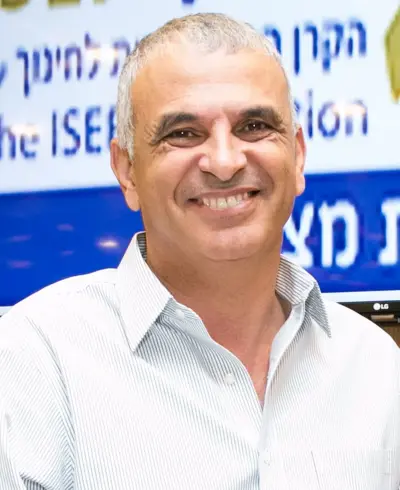
Moshe Kahlon is a retired Israeli politician. Between 2003 and 2013 he served as a member of the Knesset for Likud, and as Minister of Communications and Minister of Welfare & Social Services. After taking a break from politics, he founded the Kulanu party in 2014, and returned to the Knesset the following year. In 2015, he was appointed Minister of Finance in the Netanyahu IV cabinet. On 12 January 2020, Kahlon announced that he would be retiring from politics.
