William Ellery Channing Quotes
Every human being has a work to carry on within, duties to perform abroad, influence to exert, which are peculiarly his, and which no conscience but his own can teach.
Channing, William Ellery. "Spiritual Freedom." The Works of William E. Channing, D.D., vol. 4, James Munroe and Company, 1841, p. 98.

Embury, a Methodist preacher from England, was urged by Heck to preach in America. He protested that he had neither church building nor congregation.


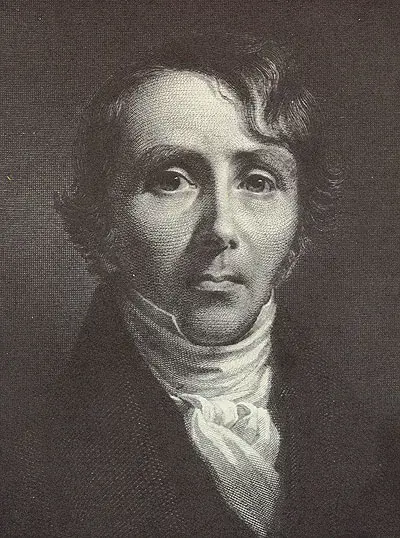
William Ellery Channing was the foremost Unitarian preacher in the United States in the early nineteenth century and, along with Andrews Norton (1786–1853), one of Unitarianism's leading theologians. Channing was known for his articulate and impassioned sermons and public speeches, and as a prominent thinker in the liberal theology of the day. His religion and thought were among the chief influences on the New England Transcendentalists although he never countenanced their views, which he saw as extreme. He espoused, especially in his "Baltimore Sermon" of May 5, 1819, given at the ordination of the theologian and educator Jared Sparks (1789–1866) as the first minister of the newly organized First Independent Church of Baltimore, the principles and tenets of the developing philosophy and theology of Unitarianism, leading to the organization in 1825 of the first Unitarian denomination in America (American Unitarian Association) and the later developments and mergers between Unitarians and Universalists, resulting finally in the Unitarian Universalist Association of America in 1961.
