Ayn Rand Quotes
Every dictator is a mystic, and every mystic is a potential dictator. A mystic craves obedience from men, not their agreement. He wants them to surrender their consciousness to his assertions, his edicts, his wishes, his whims - as his consciousness is surrendered to theirs. He wants to deal with men by means of faith and force - he finds no satisfaction in their consent if he must earn it by means of facts and reason. Reason is the enemy he dreads and, simultaneously, considers precarious: reason, to him, is a means of deception
Ayn Rand, 1905-1982, Writer & Philosopher, Atlas Shrugged, 1957
Sourced by: Eigen's Political and Historical Quotations


In 1902 there was a national crises brought about by a coal strike. At that time the president had no legal powers in such a matter. Lodge urged President Theodore Roosevelt to take a symbolic public stand on the strike issues. He did so, and it led to a successful arbitration of the dispute. It was one of the first examples of presidential "jawboning:"

Operations were performed without any anesthetics in those days. The operation failed and Garfield died of infection.


Historically, most dictators have announced their worst intentions and in many cases were not believed by much of the world who then learned that they had made a serious error.


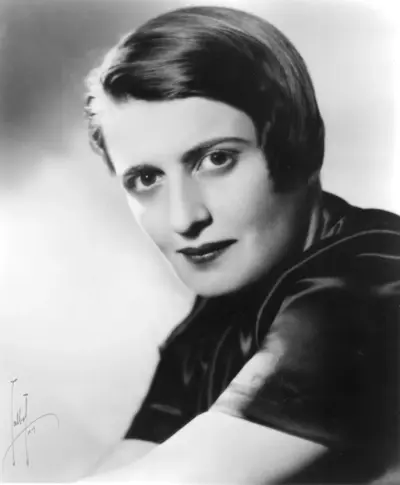
Ayn Rand was a Russian-American writer and philosopher. She is known for her two best-selling novels, The Fountainhead and Atlas Shrugged, and for developing a philosophical system she named Objectivism. Born and educated in Russia, she moved to the United States in 1926. She had a play produced on Broadway in 1935 and 1936. After two early novels that were initially unsuccessful, she achieved fame with her 1943 novel, The Fountainhead. In 1957, Rand published her best-known work, the novel Atlas Shrugged. Afterward, she turned to non-fiction to promote her philosophy, publishing her own periodicals and releasing several collections of essays until her death in 1982.
