Yukio Mishima Quotes
Even when we're with someone we love, we're foolish enough to think of her body and soul as being separate. To stand before the person we love is not the same as loving her true self, for we are only apt to regard her physical beauty as the indispensable mode of her existence. When time and space intervene, it is possible to be deceived by both, but on the other hand, it is equally possible to draw twice as close to her real self.
Mishima, Yukio. Spring Snow. Translated by Michael Gallagher, Alfred A. Knopf, 1972.


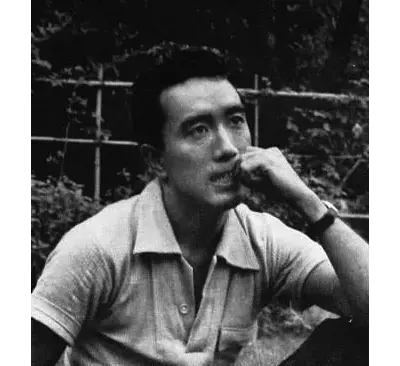
Yukio Mishima, born Kimitake Hiraoka (平岡 公威, Hiraoka Kimitake) was a Japanese author, poet, playwright, actor, model, Shintoist, nationalist, and founder of the Tatenokai (楯の会, "Shield Society"), an unarmed civilian militia. Mishima is considered one of the most important Japanese authors of the 20th century. He was considered for the Nobel Prize in Literature in 1968, but the award went to his countryman and benefactor Yasunari Kawabata. His works include the novels Confessions of a Mask (仮面の告白, Kamen no kokuhaku) and The Temple of the Golden Pavilion (金閣寺, Kinkaku-ji), and the autobiographical essay "Sun and Steel" (太陽と鉄, Taiyō to tetsu). Mishima's work is characterized by "its luxurious vocabulary and decadent metaphors, its fusion of traditional Japanese and modern Western literary styles, and its obsessive assertions of the unity of beauty, eroticism and death".
