Will Durant Quotes
Even when repressed, inequality grows; only the man who is below the average in economic ability desires equality; those who are conscious of superior ability desire freedom, and in the end superior ability has its way.
Durant, Will, and Ariel Durant. The Lessons of History. Simon and Schuster, 1968, p. 20.


The subtlety of equality has always been problematical in republics and democracies. Generally experience and common sense tells us that not all people are equal in all variables and talents. “Equality” is in the democratic sense means that society gives all equal rights, dignity and respect, not that we can eliminate the individual differences between people.


In 1881 this view was that of a radical political outlier. In the first decades of the 21st century, this was a generally acceptable political viewpoint held by members of both major political parties.


In modern America, there are two political views of this notion. The one held by a small majority of the population is Trenchard’s quotation taken literally. Their view is that there if the is no way to maintain liberty if there is too wide a gap between the rich and the rest of the population. The second variant, held by many conservatives limits the equality to equality of opportunity. They are loathe to take any position that says that any gap between the rich and the remainder of the citizens might be too large. They would particularly disagree with the first sentence of another Trenchard quotation, {627024}.


He was advocating a middle ground between corporate and wealthy individuals’ control of the government which then to a great extent existed and the Communist idea of the dictatorship of the proletariat.


At the time, land was much more of a necessity for the average person than today in America. But in early America and much of the rest of the world today, without land one had little or no opportunity to do almost anything. So equality of land distribution was necessary for equality of opportunity. America never solved the problem of equality of land distribution; we just developed an economy where land was not longer so critical to opportunity.


The debate over income inequality generally ranges between the two extremes of Christie’s hypothetical equal, mediocre salary to the extreme wealth of the 1% controlling most of the wealth. However , where America was moving in its most general affluent times was not towards equal compensation, but to a large range of remuneration with the low end and middle constantly increasing over time and the high end a reasonable multiple of the low end. However, the breakdown came in the last decades of the 20th century and the early 21st century when the low end did not increase (discounting for inflation) in 40 years, nor did the middle, while the high end increased enormously. So the nation had 40 years of growth without the lower or middle classes benefitting much and all the benefit going to the wealthy and most of that to the very wealthy. Thus the instinct was to tax the wealthy more heavily and spending the money to increase opportunity for the lower and middle classes. However, the political battle was waged over the taxing issue and not on what could be done to have the poor and the middle class obtain a larger proportion of the growth and a smaller percentage of the setbacks.


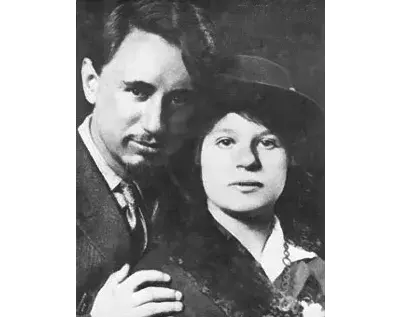
William James Durant was a Russian born, historian, and philosopher. He became best known for his work “The Story of Civilization,” and acclaimed 11 volume series written over 50 years in collaboration with his wife, Ariel Durant, and published between 1935 and 1975. He was earlier noted for The Story of Philosophy (1926), described as "a groundbreaking work that helped to popularize philosophy". They were awarded the Pulitzer Prize for General Non-Fiction in 1968 and in 1977, the Durants were presented with the Presidential Medal of Freedom.
