Richard Dawkins Quotes
Even if 'going retrograde' or 'moving into Aquarius' were real phenomena, something that planets actually do, what influence could they possibly have on human events? A planet is so far away that its gravitational pull on a new-born baby would be swamped by the gravitational pull of the doctor's paunch.
Dawkins, Richard. Unweaving the Rainbow: Science, Delusion and the Appetite for Wonder. Houghton Mifflin, 1998, p. 119.


The Roman Catholic Church had stultified scientific thinking for over a thousand years where differing with accepted church doctrine was not only discouraged but was dangerous. Hicletas—see {590328}—realized that the earth rotated around its own axis three centuries before Christ, and his view was in the literature to which learned people had access. Copernicus later communicated this idea to the Pope but in much more delicate terms—see {590327}. He did not have the problems that Galileo endured with the Church for several reasons. There were different men controlling the church, the printing press had been invented and Galileo published a book that many could read, the Protestant Reformation had really frightened the Church fathers who felt more vulnerable and less tolerant.


This is a very important quotation for it proves that the solar system was known to be centered around the sun (and not the Earth) 1500 years before the Roman Catholic Church was persecuting Galileo for claiming the opposite. The church exercised such control over thoughts and expression that they suppressed what scientists had known for over 1000. Modern governments cannot suppress truth easily for 1000 days and often not more than a few days. The Romans learned it from the Egyptians so it was not a major secret until it was made one by the church This astronomer of Cleopatra’s Egypt, was the one who taught Julius Caesar about the Egyptian calendar which he adopted for Rome and the Western World. See {621708} .


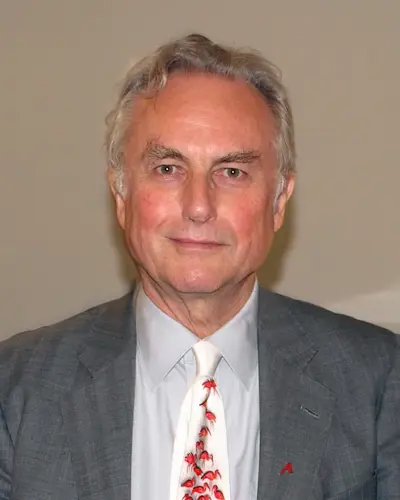
Richard Dawkins FRS FRSL is a British ethologist, evolutionary biologist, and author. He is an emeritus fellow of New College, Oxford, and was the University of Oxford's Professor for Public Understanding of Science from 1995 until 2008. An atheist, he is well known for his criticism of creationism and intelligent design.
