C. L. R. James Quotes
Du Bois marked a great stage in the history of Negro struggles when he said that Negroes could no longer accept the subordination which Booker T. Washington had preached.
James, C. L. R. American Civilization. Cambridge: Blackwell Publishers, 1993.


Booker T. Washington was a Black leader who did much for his people, but his objectives were quite limited. He was “the white’s favorite Black man.” Du Bois not only took on the White establishment but the Black establishment as well.

Ironically Fort-Whiteman was arrested in Moscow in one of Stalin’s massive purges and sent to a Soviet Gulag where he died of starvation. He was one of several Americans who were Stalinist victims. Ironically, he was right about Blacks and revolutionary change, but whereas he thought the “revolution” would be a socialist and communist one, the “Civil Rights Revolution” was a legal, cultural and intellectual one. However, statements like this were taken advantage of by white racists who saw in every attempt to right the wrong of racial discrimination, a communist revolution in the making.
In the early 20th century, Carver and Du Bois were the two most important Negro leaders in America. However, they disagreed over tactics. Carver tended to believe that if the Negro would be educated and trained for meaningful occupations, he would rise in the eyes of the whites and discrimination would diminish. Du Bois was more cynical as can be seen in this quotation as he looked back on history when he was 95 and close to death. He had the advantage at this time of seeing that Washington’s strategy had failed, but he opposed Washington on this from the beginning. Most whites preferred Washington’s view as whites were relived of immediate moral responsibility for racism and the burden was placed on Blacks to train, develop and display themselves as worthy. It was only when very large numbers of Blacks had done this and nothing much changed in terms of civil and economic rights, that it was clear that Washington’ view had been hopelessly naïve.

This appears to be the first use of the phrase "Black Power."


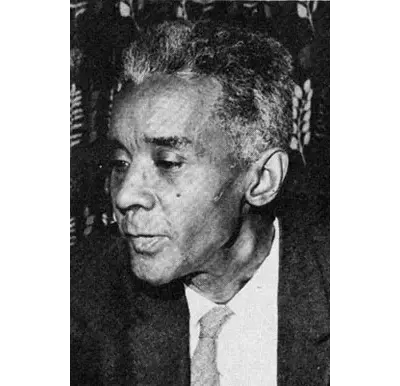
Cyril Lionel Robert James, who sometimes wrote under the pen-name J. R. Johnson, was a Trinidadian historian, journalist and Marxist. His works are influential in various theoretical, social, and historiographical contexts. His work is a staple of Marxism, and he figures as a pioneering and influential voice in postcolonial literature. A tireless political activist, James is the author of the 1937 work World Revolution outlining the history of the Communist International, which stirred debate in Trotskyist circles, and in 1938 he wrote on the Haitian Revolution, The Black Jacobins.
