Al Sharpton Quotes
Don't talk to us like we ignint!
Sharpton, Al. Rally in Bensonhurst. 1989, Brooklyn, NY.


This quote is often cited to imply that Luther endorsed rioting which is not the case. See the related quotes from the same speech for the larger context of the quote which makes clear Luther’s true views of the unproductiveness and destructiveness of rioting.


As Secretary of State, Powell was going to address the UN Security Council on the 5th and he was coordinating his speech with the other agencies of the government. His criterion was that he only wanted to make accusations that were backed up by incontrovertible evidence. However, VP Richard Cheney and his aide, Scooter Libby, kept inserting an accusation that Iraq was involved with and supported Al Qaeda. This was one of the many speculations that those who wanted to justify attacking Iraq kept using as Domestic propaganda. When Powell asked for proof or intelligence reports and none could be provided, he removed the accusation from the speech explaining why. However, at the last minute, Cheney and his staff put the accusation back in, and that triggered the quotation. Unfortunately, Powell was so busy fending off totally absurd accusations, that he accepted the CIA assurances {79468} that Iraq was developing nuclear weapons that were about to be operationalized and never heard from those who questioned the credibility of the sources for the basic accusation. Powell had great trust among the diplomats of the world then gave the United States version to the Security Council and justified our coming invasion of Iraq. But the intelligence report, despite the assurances of the CIA and the Vice President, was false and Iraq not only was not close to a nuclear weapon but he had no program at all at that time to try and develop one. Powell resigned and his credibility about the world was ruined as he was then seen as just another lying politician.


When Admiral Lewis Strauss, President Truman's special assistant on atomic energy, refused to go beyond vague generalities in an interview, Alsop remarked:


He was referring to writer and filmmaker Michael Moore who was one of the President’s most vocal and caustic critics. See {615194} for an example.


Muller warns of a very common error made by most politicians and critics who are faced with populism. To ignore them is also self defeating. Best results seem to come from just calmly present factual counter evidence to whatever is being alleged at the moment. And to acknowledge their right in a democracy to think as they do, but we respectfully disagree. The respect is very important in interacting with populists whose major complaint is most often that they are not regarded with dignity in the society as it now exists. And for many educated, above-average intellect people, there is a difficulty in extending their egalitarian philosophy to those who do not honor, respect or even understand the major tenets and norms of intellectual interaction. In most cases, the politicians who have populist appeal not only treat the people with great dignity and appreciation (feigned or real), but take of the cry for their complaints and suspicions in more eloquent oratory that the disaffected people are able to themselves, and that is a great part of the seemingly magic hold that the populist politician seems to have over his constituency.


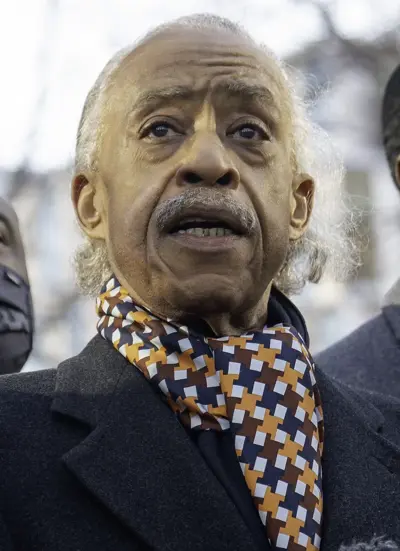
Alfred Charles Sharpton is an American civil rights activist, Baptist minister, talk show host and politician. Sharpton is the founder of the National Action Network. In 2004, he was a candidate for the Democratic nomination for the U.S. presidential election. He hosts his own radio talk show, Keepin' It Real, and he makes regular guest appearances on cable news television. In 2011, he was named the host of MSNBC's PoliticsNation, a nightly talk show. In 2015, the program was shifted to Sunday mornings.
