Hugo Black Quotes
Denaturalization consequences may be more grave than consequences that flow from conviction of crime [in the U. S.].
Hugo Black, 1886-1971, U. S. Senator (Democrat, AL), U. S. Supreme Court Justice, Klapprott v. United States, 1947-1948
Sourced by: Eigen's Political and Historical Quotations


At the time, many people referred to immigrants who had entered the United States without the proper documentation or by contravening our laws were referred to as “illegals” or “illegal immigrants”. Bank robbers and rapists were never referred to as “illegals”—only immigrants. Carroll and others pointed out that there was no such thing as an “illegal person”—only illegal acts.


The quote is often misreported as “I am, you know, adamantly against illegal illegal immigration."

See his other quotation on Jews and Italians


The illegal alien problem had vexed Republican and Democratic Administrations for over 50 years and is one of the most complicated of all the problems facing the nation. She offered the voters a simple solution.


Clyburn was the Democratic whip of the House. He was opposed to his party’s initial position on Immigration Reform. What he and many others who opposed “amnesty” did agree to was a scheme where undocumented immigrants who had broken the law were declared guilty, paid a fine, and had their application for citizenship delayed for some years. Others who opposed amnesty saw this alternative as amnesty if citizenship would ever be granted to an “illegal alien”. The latter group were all Republicans who also believed that immigrants tended to vote Democratic once they became citizens.

The words “illegal alien” are crude and needlessly harsh. There are people who are in American illegally, but the people are not illegal. There is no such term in United States law as “illegal alien”. See {640788}.

The Governor had sent the Federal Government a bill for $118 million to cover the cost of medical, educational, and other social services for illegal aliens.


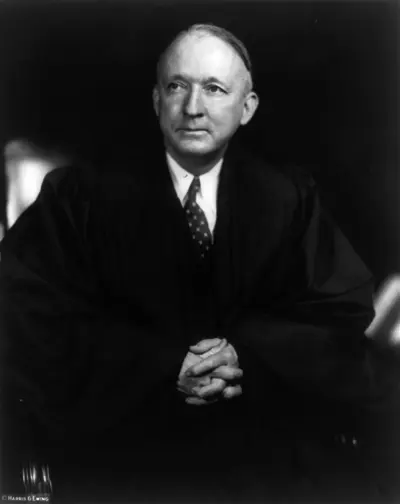
Hugo Lafayette Black was an American lawyer, politician, and jurist who served as a U.S. Senator from 1927 to 1937 and as an Associate Justice of the Supreme Court of the United States from 1937 to 1971. A member of the Democratic Party and a devoted New Dealer, Black endorsed Franklin D. Roosevelt in both the 1932 and 1936 presidential elections. Having gained a reputation in the Senate as a reformer, Black was nominated to the Supreme Court by President Roosevelt and confirmed by the Senate by a vote of 63 to 16 (six Democratic Senators and 10 Republican Senators voted against him). He was the first of nine Roosevelt appointees to the Court, and he outlasted all except for William O. Douglas.
