Oliver Wendell Holmes Jr. Quotes
Deep-seated preferences cannot be argued about — you cannot argue a man into liking a glass of beer — and therefore, when differences are sufficiently far reaching, we try to kill the other man rather than let him have his way. But that is perfectly consistent with admitting that, so far as appears, his grounds are just as good as ours.
Oliver Wendell Holmes Jr., 1841-1935, U. S. Supreme Court Justice, Natural Law, 1921
Sourced by: Eigen's Political and Historical Quotations


Vladimir Lenin. Ironically it was Lenin who was among the first Russian leaders to recognize Stalin’s shortcomings. However, it turned out to be too late. He had enough strength and power in Russia to withstand attempts to depose him.

At that time Brown’s Republican Party was dominated by extreme conservatives who tended to attack the character and motivation of anyone who did not agree with them—including members of their own party. Brown however came from a state with a strong Republican tradition of liberalism, which however then had a majority of Democrats as most of the liberal Republicans had been driven out of the party by the Republican extremists. At the time, the Republican party had become so extremist that many thought him disloyal to the part for making this statement. The Tea Party credo then as good people do not support evil and immoral policies and they tended to see almost all policies in moral and ethical terms.


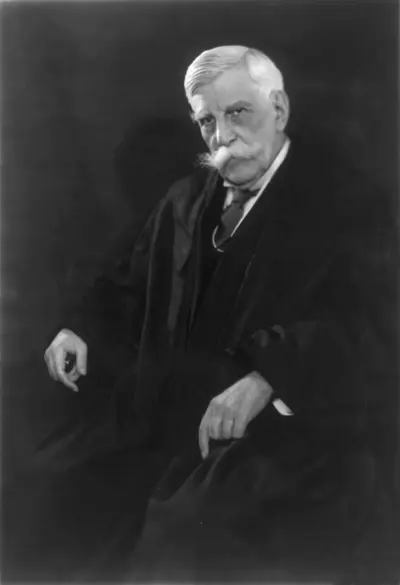
Oliver Wendell Holmes Jr. was an American jurist who served as an Associate Justice of the Supreme Court of the United States from 1902 to 1932. Noted for his long service, concise and pithy opinions, and deference to the decisions of elected legislatures, he is one of the most widely cited United States Supreme Court justices in history, particularly for opinions on civil liberties and American constitutional democracy, and is one of the most influential American common law judges, honored during his lifetime in Great Britain as well as the United States. Holmes retired from the court at the age of 90, an unbeaten record for oldest justice in the federal Supreme Court (although John Paul Stevens was only 8 months younger when he retired on April 12, 2010). He previously served as an Associate Justice and as Chief Justice of the Massachusetts Supreme Judicial Court, and was Weld Professor of Law at his alma mater, Harvard Law School.
