Paul Celan Quotes
Death is a master from Germany.
Celan, Paul. Poems of Paul Celan. Translated by Michael Hamburger, Persea Books, 1988, p. 63.


Although a fervent Nazi, he detested Hitler. When Hitler consolidated power, one of the first things he did in 1934 was to order his guards to murder Strasser, just as Strasser had feared.

She had saved over 2000 Jewish Children in the Warsaw Ghetto from Death by the Nazis. As a member of the Polish Resistance, she was caught be the Germans, badly tortured, and sentenced to death which she narrowly escaped.

Robinson who was a Republican from New York was, like the other Negro Republican delegates , when they were cursed, shoved, threatened and spat on. The Southern delegates were part of a general Southern backlash as a result of the passage of the Civil Rights Act of 1964.


This was the first day of WWII and Hitler’s armies seemed invincible. Kaplan was one of the few who at that time predicted allied victory. He was not even wrong about his own fate. He and the vast majority of the Jews in the Warsaw ghetto never survived.

This new form of patriotism, this encouragement of pregnancy—even outside of marriage—was just too controversial. Himmler withdrew the order. It illustrates that even in a brutal dictatorship, public opinion can influence government.
He had been part of a plot to assassinate Adolf Hitler. There were a small group of Anti Nazi Germans during WW II. Carnaris was one. Most were killed.
See Talaat Bey {40621} for a similar twisted logic.


This quotation is important because there are some who believed that the professional German Soldiers did not respect Hitler and his murderous policies. This quotation shows that at least publicly Donitz had no problem extolling Hitler above all others. After the war Donitz was found guilty of Unrestricted Submarine Warfare and using thousands of slave laborers in his shipyards. He was sentenced to 10 years, one of the lightest sentences if the German War Crimes Trials.
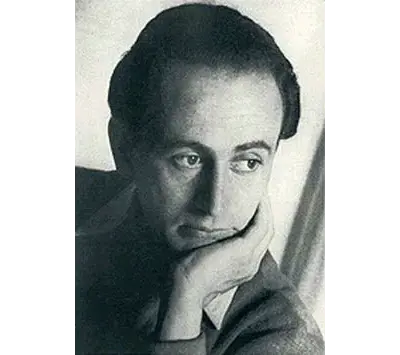
Paul Celan was a Romanian-born German-language poet and translator. He was born as Paul Antschel to a Jewish family in Cernăuți (German: Czernowitz), in the then Kingdom of Romania (now Chernivtsi, Ukraine), and adopted the pseudonym "Paul Celan". He became one of the major German-language poets of the post–World War II era.
