Michael McCaul Quotes
Currently, the United States provides 22 percent of the U.N. annual budgets, over $900 million in fiscal year 2007, and some of that funding goes to the Human Rights Council.
McCaul, Michael. "United Nations Human Rights Council Reform." Congressional Record, vol. 152, no. 43, U.S. Government Publishing Office, 5 Apr. 2006, p. H1459.


He was responding to the United Nations Security Counsil resolution calling on Israel to stop the building of settlemetns in the "occupied" territories. Normally such resolutions such as these were vetoed bu the United States, but this time it was not and Secretary of State John Kerry made a major speech urging the Israels not to keep building settlements which in his view inflamed the Palestinians and made the prospects for a peace less likely. The Israelis argued that the particualar areas--Jerusalem, Judea and Summaria were consecrated by God for the Jewish people who have inhabited the area for over 3000 years, and while they do not insist on sovreignty over the Judea and Summaria, from which Jews had been ethnically cleased, they do demand that the Jewish People who want to should be allowed to fulfill God's mandate and settle in their traditional territories. The traditional view of the United States on the settlement issue is that what God had done thousands of years cannot be allowed to override the obligagtion of israel and teh Palestinians to negotate the status of the territories that became an obligation when the Oslo Accords were signed in the recent past. Trump was very sympathetic to the Israeli position and was one of the many Americans who ha little or no respect for the United Nations.


The United States Senate refused to ratify the Treaty that President Woodrow Wilson had negotiated establishing the League of Nations.
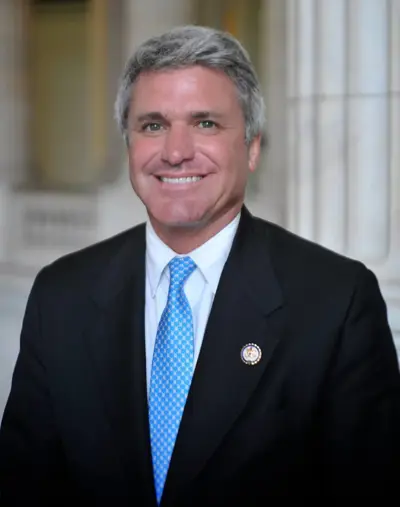
Michael Thomas McCaul Sr. is an American attorney and politician serving as the U.S. Representative for Texas's 10th congressional district since 2005. A member of the Republican Party, he served as chairman of the House Committee on Homeland Security during the 113th, 114th, and 115th Congresses. His district stretches from Austin to Houston. As of 2018, he was the fifth-wealthiest member of Congress.
