Ruth Bader Ginsburg Quotes
Courts should ... follow, rather than lead, changes taking place elsewhere in society.
Ruth Bader Ginsburg, U. S. Supreme Court Justice, Madison Lecture, 1993
Sourced by: Eigen's Political and Historical Quotations


Viscount Morley of Blackburn


The dramatic thing about this quotation is that in public, the mantra of conservatives about the courts of America is that they make and change laws as opposed to just interpreting and clarifying the laws. They traditionally accuse judges who rule against their favorite positions as using the courts as an instrument of political and social change. Here a leading conservative federal jurist, who thereafter became a member of the Supreme Court, was acknowledging and advocating the courts as instruments for conservative social, economic, and political change.


She was the first Black woman to be elected to Congress and was the first Black woman to actively campaign for the Presidency


The inventor of the Chi Square and Correlation Coefficient statistical methods. The lecture was also published as a political pamphlet. Pearson criticized the English Socialists who were calling for substantial immediate reforms on many fronts. Many of the reforms had much general support and the major political issue was the pace of reform.


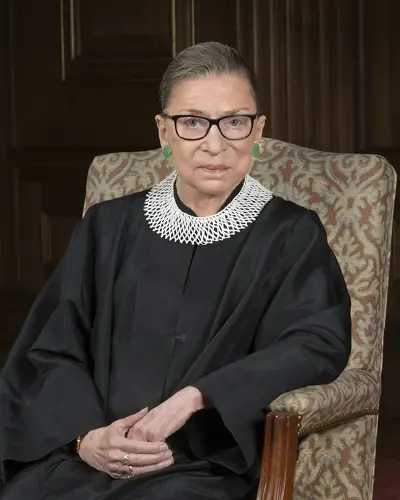
Joan Ruth Bader Ginsburg was an American lawyer and jurist who served as an associate justice of the Supreme Court of the United States from 1993 until her death in September 2020. She was nominated by President Bill Clinton, replacing retiring justice Byron White, and at the time was generally viewed as a moderate consensus-builder. She eventually became part of the liberal wing of the Court as the Court shifted to the right over time. Ginsburg was the first Jewish woman and the second woman to serve on the Court, after Sandra Day O'Connor. During her tenure, Ginsburg wrote notable majority opinions, including United States v. Virginia (1996), Olmstead v. L.C. (1999), Friends of the Earth, Inc. v. Laidlaw Environmental Services, Inc. (2000), and City of Sherrill v. Oneida Indian Nation of New York (2005).
