Richard Burt Quotes
Counter insurgency is unworkable without a responsive and politically popular national government.
Some of America’s very difficult counter-insurgency efforts like Vietnam, Iraq and Afghanistan have been problematical since Burt’s necessary popular national government was not in place in these efforts. The governments were corrupt, incompetent, and uncaring about the majority of people. Arguably, if there were a “responsive and politically popular national government” in place, there may well have not been a serious insurgency to begin with.
Richard Burt, Assistant Secretary of State & U.S, Ambassador to Germany, Chairman, Global Zero, Quoted in Foreign Policy, March/April, 2011
Sourced by: Eigen's Political and Historical Quotations


This was the time of the rise of Hitler and efforts of communist revolutionary activity alike.


The United States should be One major problem at the time was that the Soviet Union was supporting and instigating revolutions in many parts of the world. When most nations of the UN wanted to provide peace keeping troops to quell the conflict, the Russians would veto and block the effort, Vandenberg wanted the UN to change the rules regarding the veto. The original right of veto for the major nations was originally included at the insistence of the United States and many Americans did not want to give it up or have any exceptions lest there be more. The Russians at that time also did not want to give up any of their veto powers. Another method that Vandenberg wanted to solve the Russian peacekeeping blockage problem was for America to engage in more collective security pacts so that action could be taken without UN Security Council unanimity by going around the UN.

At the time he was commenting on the War in Afghanistan.


At the time, our culture was much more “macho” than it is today. Men who strongly advocated peace risked being perceived as not masculine enough. Theodore Roosevelt was the cultural icon of the day as John Wayne would come to be later.
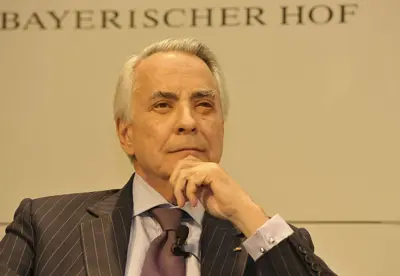
Richard R. Burt is an American businessman and diplomat who served as United States Ambassador to Germany and was a chief negotiator of the Strategic Arms Reduction Treaty. Prior to his diplomatic career, Burt worked as director of a non-governmental organization and from 1977 to 1980 was a national security correspondent for The New York Times.
