Bob Dylan Quotes
Come senators, congressmen, Please heed the call, Don't stand in the doorway, Don't block up the hall, For he that gets hurt, Will be he who has stalled, The battle outside ragin', Will soon shake your windows and rattle your walls, For the times they are a-changin'...
Dylan, Bob. "The Times They Are A-Changin'." The Times They Are A-Changin', Columbia Records, 1964.


His strategy was to fill the jails of Birmingham, and asked the young people to help. The next days saw virtually all the Birmingham high school students our of school and in the streets protesting which was then against the un-Constitutional laws of Birmingham and Alabama. The students were arrested by the droves and the white authorities, believing that they were being firm against “radical lawbreakers”, fell into the trap, and became a travesty to most of the country and the rest of the world and the hundreds of jailed students beaten and assaulted raised the consciousness of whites as well as Blacks.


This speech is often referred to as the “Ballot or the Bullet” speech. It was the first time that Malcolm X used the “Ballot or the Bullet”. He was not the first African American to use the “Ballot or the Bullet” phrase. See {624102} for a use over 100 years ago. However, he was really arguing to allow Blacks to vote in the South where it was almost impossible at the time. There was no Voting Rights Act at that time and it was his actions that helped pass one shortly thereafter.

Technically the correct title is Chief Justice of the United States. He was one of the longest-serving Chief Justices and in his tenure the court did change from a liberal court to a conservative one.


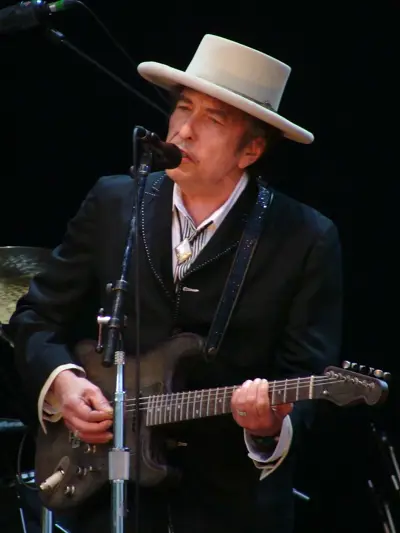
Bob Dylan is an American singer-songwriter, author and visual artist. Often regarded as one of the greatest songwriters of all time, Dylan has been a major figure in popular culture for more than 50 years. Much of his most celebrated work dates from the 1960s, when songs such as "Blowin' in the Wind" (1963) and "The Times They Are a-Changin'" (1964) became anthems for the civil rights and anti-war movements. His lyrics during this period incorporated a range of political, social, philosophical, and literary influences, defying pop music conventions and appealing to the burgeoning counterculture.
