Book of Isaiah Quotes
Come now, and let us reason together or you shall be devoured by the sword.
The first clause of the disjunction was a favorite quote used by Lyndon Johnson during negotiations over civil rights legislation, 1964-1965. While he did not utter the second clause, many familiar with the Bible and Johnson’s tactics, took its meaning also.
Old Testament, Book of Isaiah 1:18-20
Sourced by: Eigen's Political and Historical Quotations


Erecat was expressing his frustration with the peace negotiations and the lack of progress.


Attila the Hun. They were discussing a structure for negotiating Attila’s grievance against Rome.

The highest court in New York.


Shortly after, he backed off the notion of having a bloodbath removing protesting students.

After the attack on Fort Sumter, the South Sent “diplomats” to negotiation with the Government. Unfortunately for all, the South really was not open to negotiations as they only had two predetermined positions they would agree to: The first was that the Government should guarantee the perpetual right of states to have slavery if they wished and that fugitive slaves would be returned by the non-slave states. The second was that the Union should recognize the Confederacy as an independent nation and have peaceful relations between the two. The first was impossible to deliver even if the Union would agree to continue slavery, there was no way that the Federal Government could enforce the return of fugitive slaves from many northern states where they were free the second they set foot in the state, and the Northern states demanded States Rights and not being forced to return Fugitive Slaves forcing the Southern States to oppose States Rights when it came to Fugitive Slaves while favoring it for slavery itself. The Federal government could not enforce the Dred Scott Decision under the pro-South Buchanan administration. And Lincoln and most of the Northern Politicians would not accept a complete dissolution of the Union. There are no other possibilities the South would accept and there was really nothing to negotiate.

In this case, he was referring to the situation with the Barbary Pirates who had an incredible extortion racket going in the Mediterranean. If nations would pay them an annual sum each year, they would not attack and seize merchant ships of that country and sell the ships and goods while holding the sailors for ransom. Jefferson favored and authorized war—a naval attack which for many reasons the European nations had not done (they just paid the tribute). Then a peace treaty was finally signed—the first American Treaty.


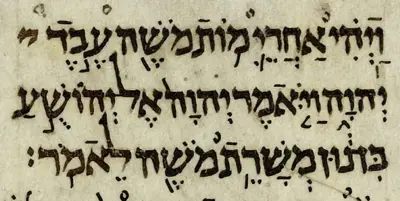
The Book of Isaiah (Hebrew: ספר ישעיהו, [ˈsɛ.fɛr jə.ʃaʕ.ˈjaː.hu]) is the first of the Latter Prophets in the Hebrew Bible and the first of the Major Prophets in the Christian Old Testament. It is identified by a superscription as the words of the 8th-century BCE prophet Isaiah ben Amoz, but there is extensive evidence that much of it was composed during the Babylonian captivity and later. Johann Christoph Döderlein suggested in 1775 that the book contained the works of two prophets separated by more than a century, and Bernhard Duhm originated the view, held as a consensus through most of the 20th century, that the book comprises three separate collections of oracles: Proto-Isaiah (chapters 1–39), containing the words of the 8th-century prophet Isaiah; Deutero-Isaiah (chapters 40–55), the work of an anonymous 6th-century BCE author writing during the Exile; and Trito-Isaiah (chapters 56–66), composed after the return from Exile. Isaiah 1–33 promises judgment and restoration for Judah, Jerusalem and the nations, and chapters 34–66 presume that judgment has been pronounced and restoration follows soon. While virtually no scholars today attribute the entire book, or even most of it, to one person, the book's essential unity has become a focus in more recent research.
