Fyodor Dostoevsky Quotes
Civilization merely develops man's capacity for a greater variety of sensations, and ... absolutely nothing else.
Dostoevsky, Fyodor. Notes from Underground. Translated by Richard Pevear and Larissa Volokhonsky, Vintage Books, 1993, p. 21.

Lieber in 1860 was assigned by President Lincoln to study the then international laws of war and prepare a manual for the guidance of union troops in the Civil War. Lincoln then issued the document as a general order, and much of today’s military rules of conduct came from that effort.


Ingersoll was considered to be the greatest orator and political thinker of his day, but his overt atheistic views curtailed his elected political career.


Darwin believed at the time that large populations were critical to national success and development. The next 100 years would prove that large population was a handicap to progress and real growth of standard of living.


L. P. Jacks. This lecture was given well before the development of the atomic bomb, after which many politicians and intellectual leaders picked up on this theme. Then each generation since has echoed it.


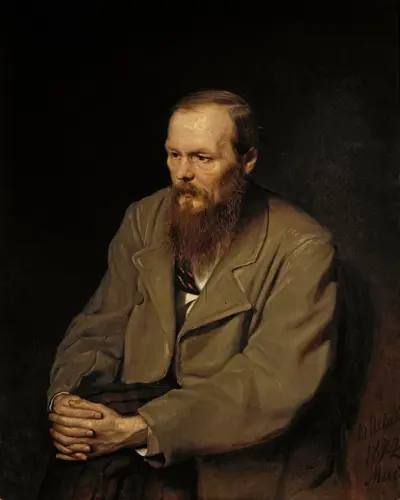
Fyodor Mikhailovich Dostoevsky, sometimes transliterated as Dostoyevsky, was a Russian novelist, philosopher, short story writer, essayist, and journalist. Dostoevsky's literary works explore human psychology in the troubled political, social, and spiritual atmospheres of 19th-century Russia, and engage with a variety of philosophical and religious themes. His most acclaimed works include Crime and Punishment (1866), The Idiot (1869), Demons (1872), and The Brothers Karamazov (1880). Dostoevsky's body of works consists of 12 novels, four novellas, 16 short stories, and numerous other works. Many literary critics rate him as one of the greatest psychological novelists in world literature. His 1864 novel Notes from Underground is considered to be one of the first works of existentialist literature.
