James Fenimore Cooper Quotes
Chingachgook grasped the hand that, in the warmth of feeling, the scout had stretched across the fresh earth, and in that attitude of friendship these intrepid woodsmen bowed their heads together, while scalding tears fell to their feet, watering the grave of Uncas like drops of falling rain.
Cooper, James Fenimore. The Last of the Mohicans; A Narrative of 1757. Vol. 2, H.C. Carey & I. Lea, 1826, p. 289.


By the end of George Washington’s Second term, he and Thomas Jefferson, his Secretary of State, were at odds. Jefferson became concerned at the Federalist policies and directions and their pro British and anti French tilt and became a leader of the attack on the Federalists after John Adams assumed the Presidency. Since Washington was the leading Federalist of his time, Mrs. Washington felt that Jefferson’s attacks on the Federalists were insulting to her husband. Washington had died in 1799, and Adams and the Federalist Party was on their last legs. When Jefferson came to give his condolences, he was on the verge of destroying Washington’s party, and Martha Washington believed that Jefferson had written some material that had attacked her husband’s policy. While Jefferson never attacked Washington by name—no one did—Mrs. Washington felt that there was too much innuendo and implied criticism from Jefferson’s strong attack on the Federalists. In the final analysis, when Jefferson won the presidency, the Federalists were so badly trounced, the party died and most of the nation agreed with Jefferson.

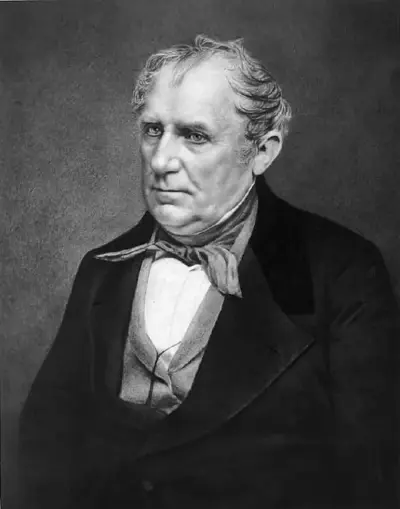
James Fenimore Cooper was an American writer of the first half of the 19th century. His historical romances depicting frontier and Native American life from the 17th to the 19th centuries created a unique form of American literature. He lived much of his boyhood and the last fifteen years of life in Cooperstown, New York, which was founded by his father William Cooper on property that he owned. Cooper became a member of the Episcopal Church shortly before his death and contributed generously to it. He attended Yale University for three years, where he was a member of the Linonian Society.
