Elizabeth Bathory Quotes
Catch a black hen and beat it to death with a white cane. Keep the blood and smear a little of it on your enemy. If you get no chance to smear it on his body, obtain one of his garments and smear it.
She actually tried all sorts of “witchcraft,” but her real crime was the murdering of other people in her rituals. She was arrested and died in jail. In Hungary, it was forbidden to speak her name aloud, and for many her name is still synonymous with evil.
Elizabeth Bathory, 1560-1614, Hungarian Countess & Murderess, Advice to her husband Ferencz
Sourced by: Eigen's Political and Historical Quotations


In the ensuing few years hundreds of “witches” were burned at the stake and suffered death in other horrible ways.

A very passionate minority of India’s Muslims demanded a separate Islamic State (that would become Pakistan) but Hindu’s and Muslims were mixed throughout India and many Indians and British were concerned that there would be a bloodbath if the plans for independence went forward. When the decision had been made to partition India, Radcliffe had the unenviable task of deciding where the boundary was to be between Pakistan and India. No one on either side was satisfied with his effort. So, realizing that violence was about to break out, he packed quickly and went back to England. Over two million Indians were killed in the violence that broke out in the next weeks as there was a huge migration and ethnic cleansing to implement Radcliffe’s boundaries. Fifty years later, both India and Pakistan acknowledge that Radcliffe did a very reasonable job.


Allen observed that atheists and irreligious people rarely believe in witchcraft. Even in free America, Allen had a very difficult time getting this work printed because it was so controversial culturally.

Even learned men with some science background believed in witches.


After he wrote that there was no such thing as witches he was imprisoned.
Head of the Sikh Religion. He was the first Sikh Guru to utilize weapons,


He was an overt atheist; there were many non believers in Europe at the time but few were overt. He also wrote under the name of Jean Baptiste de Mirabaud.

Samuel Langhorne Clemens, 1835-1910
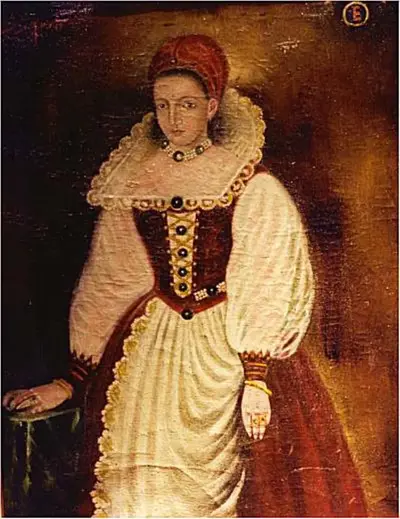
Countess Elizabeth Báthory de Ecsed was a Hungarian noblewoman from the family of Báthory, who owned land in the Kingdom of Hungary (now Hungary, Slovakia and Romania).
