Henri Lefebvre Quotes
Castles, palaces, cathedrals, fortresses, all speak in their various ways of the greatness and the strength of the people who built them and against whom they were built. This real greatness shines through the fake grandeur of rulers and endows these buildings with a lasting beauty.
Henri Lefebvre, 1901–1991, French philosopher and sociologist, Critique of Everyday Life
Sourced by: Eigen's Political and Historical Quotations


Adams was on the pompous side. The first Congress was early mired in much process and to relieve the boredom Tucker and a few others wrote various barbs pointed at the Vice President. See {44533} for another by Congressman Page.


The French King had paid the cost of the scientific experiment. Royal and Wealthy patrons together with the “sweat equity” of the scientists funded most scientific research until WWII in the 20th century in America. Since then national governments have funded larger and larger proportions of scientific research.

The Hagia Sophia was the greatest architectural and engineering enterprise of that era and remained so for centuries. The Church was so massive that there was a permanent city of 7000 people on the second level balconies with wide ramps so that horses and carts could go to the upper level. The dome was the largest unsupported dome for centuries and historians are still ignorant of exactly how it was constructed. It changed the history of architecture. The reference to Solomon referred to the building of the original Jewish Temple in Jerusalem which was up to then considered the greatest building ever constructed.

In the reign of King Stephen of England, 1135-1154

He was also the first Black student admitted to Johns Hopkins University.


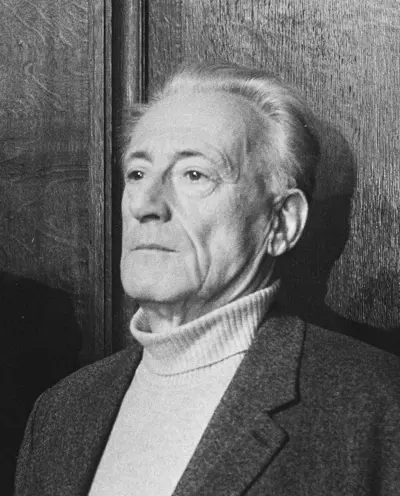
Henri Lefebvre was a French Marxist philosopher and sociologist, best known for pioneering the critique of everyday life, for introducing the concepts of the right to the city and the production of social space, and for his work on dialectics, alienation, and criticism of Stalinism, existentialism, and structuralism. In his prolific career, Lefebvre wrote more than sixty books and three hundred articles. He founded or took part in the founding of several intellectual and academic journals such as Philosophies, La Revue Marxiste, Arguments, Socialisme ou Barbarie, Espaces et Sociétés.
