Herodotus Quotes
Calumny is a monstrous vice: for, where parties indulge in it, there are always two that are actively engaged in doing wrong, and one who is subject to injury. The calumniator inflicts wrong by slandering the absent; he who gives credit to the calumny before he has investigated the truth is equally implicated. The person traduced is doubly injured--first by him who propagates, and secondly by him who credits the calumny.
Herodotus. The Histories. Translated by George Rawlinson, John Murray, 1858, Bk. 7.10.


Calumnaire fortiter, et aliquid adhaerebit. See Pierre Beaumarchais for a later version of this political tactic.


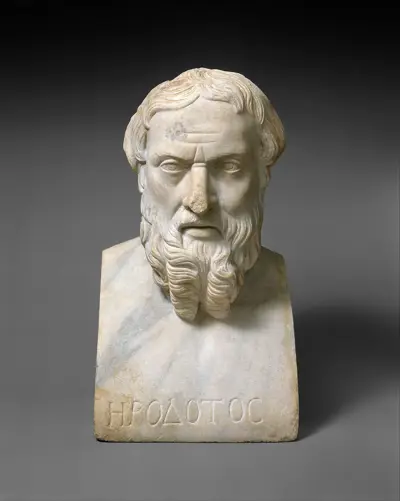
Herodotus (/hɪˈrɒdətəs/; Ancient Greek: Ἡρόδοτος, Hēródotos, Attic Greek pronunciation: [hɛː.ró.do.tos]; c. 484 – c. 425 BC) was an ancient Greek historian who was born in Halicarnassus in the Persian Empire (modern-day Bodrum, Turkey). He is known for having written the book The Histories (Ancient Greek: Ἱστορίαι Historíai), a detailed record of his "inquiry" (Ancient Greek: ἱστορία historía) on the origins of the Greco-Persian Wars. He is widely considered to have been the first writer to have treated historical subjects using a method of systematic investigation specifically, by collecting his materials and then critically arranging them into a historiographic narrative. On account of this, he is often referred to as "The Father of History," a title first conferred on him by the first-century BC Roman orator Cicero.
