Moshe Sharett Quotes
By the reduction of the Arabs on the one hand and Jewish immigration in the transition period on the other, we will ensure an absolute Hebrew majority in a parliamentary regime.
Sharett, Moshe. Speech to the Jewish Agency Executive, 1937. Quoted in Masalha, Nur. Expulsion of the Palestinians: The Concept of "Transfer" in Zionist Political Thought, 1882-1948. Institute for Palestine Studies, 1992, p. 70.


The irony is that the Zionist movement was very democratic long before most of the world had adopted democracy. They not only saw no conflict between a Jewish Homeland and democracy, but they maintained that Jewish tradition required democracy. After 60 years if constant attacks by its neighbors and having to defend the nation from invasion and extinction, the Israeli body politic actually became very conservative, while the Zionists were extremely left wing. Under the concept of Zionism there was a large population of Arabs as Israeli citizens. However, when some of those Arabs were openly against the nation in its struggle with the Palestinians and its other Muslim neighbors. Leiberman led the right wing effort in various efforts to expel the dissident Arab citizens and use very non democratic methods to cope with the right wing’s perception of the risk to the Jewish State.


These three principles not only were the philosophical and political lynchpins of the Chinese Republican efforts but were incorporated into the first line of the national anthem of the Republic of China which became the government of Taiwan when the Chinese Communists won the mainland and the rest of China. The nationalists only delivered one of the three: Nationalism and that with much corruption. The Communists delivered two with less corruption and thus won China.

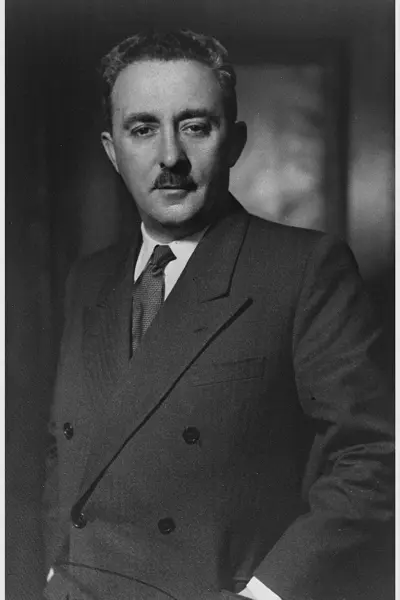
Moshe Sharett was the second Prime Minister of Israel (1954–55), serving for a little under two years between David Ben-Gurion's two terms. He continued as Foreign Minister (1955–56) in the Mapai government.
