James Monroe Quotes
By the last returns to the Department of War the militia force of the several States may be estimated at 800,000 men - infantry, artillery, and cavalry.
Monroe, James. "First Annual Message." A Compilation of the Messages and Papers of the Presidents, compiled by James D. Richardson, vol. 2, Bureau of National Literature, 1897, p. 17.


1st Baron Verulam. The word “estate’ meant a political unit or subunit. These might be ruled by kings, dukes, war lords, etc. However, Bacon’s point was all armaments and the physical trappings of war are relatively minor when compared to the qualities of the population. With modern technology, this principle has become less and less true. Given the same technology in war, the outcome will depend on the human qualities and warlike disposition of the humans. However, a modern force with modern equipment and weapons can defeat an enemy of braver and more warlike disposition which does not have the same technology. In the modern world, a number of cultures find this a very distressing reality. The noble and courageous man should win, but Western technology, many complain, is undermining the old, traditional virtues.


Umezu was one of several members of the Japanese War Council, that did not want to surrender even after the second atomic bomb destroyed Nagasaki. He and the other hard liners were convinced that the Japanese could inflict such heavy casualties on an invading force of the mainland that the Allies would not insist on unconditional surrender and Japan could negotiate favorable terms. These hard liners had already lived through the firebombing of Tokyo which in casualties was as bad as the atom bomb attacks, and felt that they could maintain a defensive force even if all the major cities of Japan were destroyed. Fortunately for all parties, the Emperor overruled Umezu and the hardliners. Umezu and the other hard liners had personal reasons to want to negotiate terms. They had committed war crimes and did not want to be brought to account. He was tried after the surrender and sentenced to life in prison where he died of cancer after 4 years.


See {637982} for one of the major reasons.
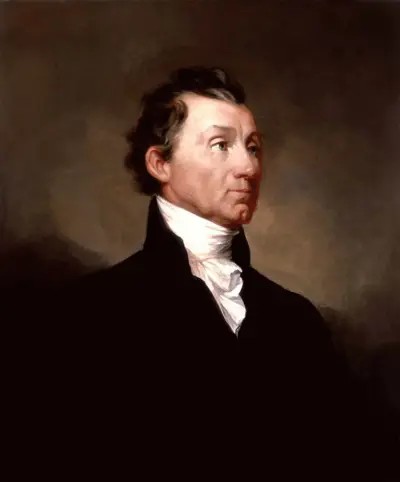
James Monroe was an American statesman, lawyer, diplomat and Founding Father who served as the fifth president of the United States from 1817 to 1825. A member of the Democratic-Republican Party, Monroe was the last president of the Virginia dynasty; his presidency coincided with the Era of Good Feelings. He is perhaps best known for issuing the Monroe Doctrine, a policy of opposing European colonialism in the Americas. He also served as the governor of Virginia, a member of the United States Senate, the U.S. ambassador to France and Britain, the seventh Secretary of State, and the eighth Secretary of War.
