Martin Buber Quotes
But when a man draws a lifeless thing into his passionate longing for dialogue, lending it independence and as it were a soul, then there may dawn in him the presentiment of a world-wide dialogue with the world-happening that steps up to him even in his environment, which consists partially of things. Or do you seriously think that the giving and taking of signs halts on the threshold of that business where an honest and open spirit is found?
Buber, Martin. Between Man and Man. Translated by Ronald Gregor Smith, Routledge & Kegan Paul, 1947, p. 25.


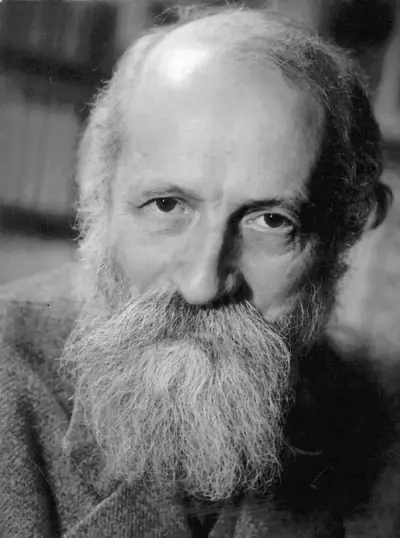
Martin Buber was an Austrian Jewish and Israeli philosopher best known for his philosophy of dialogue, a form of existentialism centered on the distinction between the I–Thou relationship and the I–It relationship. Born in Vienna, Buber came from a family of observant Jews, but broke with Jewish custom to pursue secular studies in philosophy. In 1902, he became the editor of the weekly Die Welt, the central organ of the Zionist movement, although he later withdrew from organizational work in Zionism. In 1923, Buber wrote his famous essay on existence, Ich und Du (later translated into English as I and Thou), and in 1925, he began translating the Hebrew Bible into the German language.
