Rebecca West Quotes
But once a culture develops sufficiently to become skeptical, the idea of censorship becomes less attractive. To suppress a book or a picture or a sculpture or a play or a film is a terrible act of aggression against the artist who created it. This is a miming of capital punishment; it destroys the life that has been emanated by a life.
West, Rebecca. The Court and the Castle: Some Treatments of a Recurrent Theme. Yale University Press, 1957.


Islam had been the center of intellectual thought in the world, until the clerics had decided that innovation itself was a sin and one that called for the death penalty. Although most non-Muslim religions went through stages of death for religious dissent. However, the Koran deals with every part of society. There is no separation of church and state. All knowledge is in the Koran the fundamentalist believes and anyone who expresses a new idea is not only wrong and a heretic, but is dangerous and must be executed. It is therefore not very surprising that the Islamic contributions to science, medicine, and the arts has been so small. The Islamic fundamentalists are opposed by Muslim modernists who try to change the Islamic culture but they are on the minority. Most religions have gone through bad earlier periods where dissent was heresy and warranted death. Fundamentalist Islam is the only one which bans original thought of any kinds even it does not contradict established doctrine.


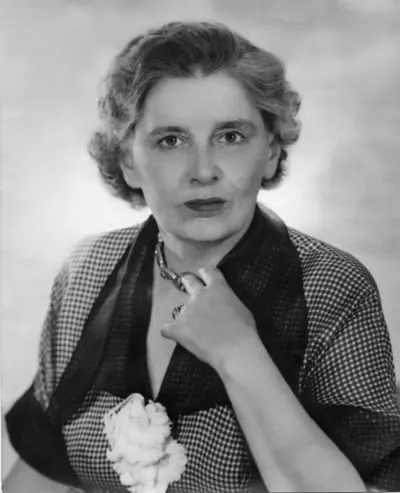
Dame Cicily Isabel Fairfield DBE, known as Rebecca West, or Dame Rebecca West, was a British author, journalist, literary critic, and travel writer. An author who wrote in many genres, West reviewed books for The Times, the New York Herald Tribune, The Sunday Telegraph, and The New Republic, and she was a correspondent for The Bookman. Her major works include Black Lamb and Grey Falcon (1941), on the history and culture of Yugoslavia; A Train of Powder (1955), her coverage of the Nuremberg trials, published originally in The New Yorker; The Meaning of Treason (first published as a magazine article in 1945 and then expanded to the book in 1947), later The New Meaning of Treason (1964), a study of the trial of the British fascist William Joyce and others; The Return of the Soldier (1918), a modernist World War I novel; and the "Aubrey trilogy" of autobiographical novels, The Fountain Overflows (1956), This Real Night (published posthumously in 1984), and Cousin Rosamund (1985). Time called her "indisputably the world's number one woman writer" in 1947. She was made CBE in 1949, and DBE in 1959, in each case, the citation reads: "writer and literary critic". She took the pseudonym "Rebecca West" from the rebellious young heroine in Rosmersholm by Henrik Ibsen. She was a recipient of the Benson Medal.
