Sallust Quotes
But assuredly Fortune rules in all things; she raised to eminence or buries in oblivion everything from caprice rather than from well-regulated principle.
[Lat., Sed profecto Fortuna in omni re dominatur; ea res cunctas ex lubidine magis, quam ex vero, celebrat, obscuratque.]
Sallust. Sallust. Translated by J.C. Rolfe, Harvard University Press, 1921, p. 15.


While this was certainly true in Ancient times, modernity has given us Public Health and other techniques that now enable us to prevent accidents. Automobile safety from seat belts and air bags are good examples. From a political point of view, however, accidents can and often do control the political landscape as in the unexpected death of a national leader. Often natural disasters are included in the general term “accidents” where the meaning is taken as that which is beyond human control.


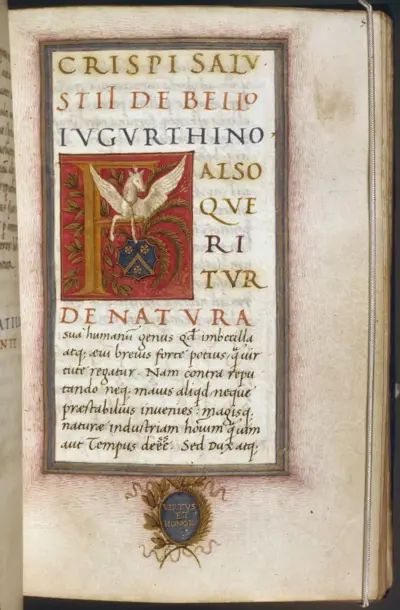
Gaius Sallustius Crispus, usually anglicised as Sallust (/ˈsæləst/; 86 – c. 35 BC), was a Roman historian and politician from an Italian plebeian family. Sallust was born at Amiternum in the country of the Sabines and was a popularis, an opponent of the old Roman aristocracy, throughout his career, and later a partisan of Julius Caesar. Sallust is the earliest known Latin-language Roman historian with surviving works to his name, of which Catiline's War (about the conspiracy in 63 BC of L. Sergius Catilina), The Jugurthine War (about Rome's war against the Numidian King Jugurtha from 111 to 105 BC), and the Histories (of which only fragments survive) are still extant. Sallust was primarily influenced by the Greek historian Thucydides and amassed great (and ill-gotten) wealth from his governorship of Africa.
