Black Hawk Quotes
[Black Hawk] has fought for his countrymen, the squaws and papooses, against white men, who came year after year, to cheat them and take away their lands. You know the cause of our making war. It is known to all white men. They ought to be ashamed of it.
Black Hawk. "Surrender Speech." Indian Oratory: Famous Speeches by Noted Indian Chieftains, edited by W. C. Vanderwerth, University of Oklahoma Press, 1971, p. 91.


The century to which he was referring was the 19th century---1800-1899.


Wayne played so many parts depicting whites in the process of expanding Westward that many people saw him as an expert on the history of the Westward Expansion. He did not comment on the whites who then kept huge ranches “selfishly” for themselves or those who selfishly would not share the mineral rich land that they had taken with anyone including the original Indian owners. So in this view, the Indians should have not been capitalists but they should have been socialists and shared their resources.

Gold had been discovered in the Black Hills lands that were sacred to the Lakota Sioux and were reserved for exclusive use of the Indians by the Fort Laramie Treaty. Greedy whites, ignoring the treaty provisions not only entered the Black Hills to pan and mine for the gold, but killed many Indians they ran across Sherman was angry and wrote to his old friend President Grant. Grant, now a political, had to contend with public opinion that thought it absurd that gold should not be mined because a few Indians regarded the land as sacred. Meanwhile Grant was working with a few others to portray minor clashes between whites and Indians in the Black Hills as violent and dangerous Indians breaking the treaty.


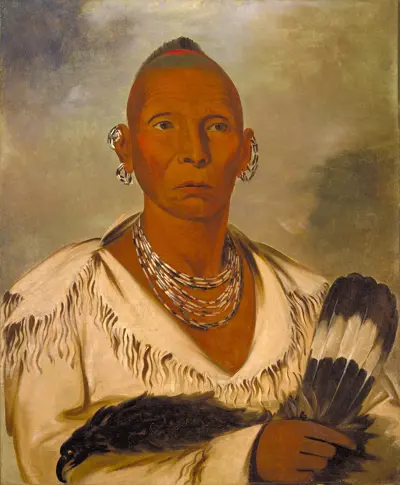
Black Hawk, born Ma-ka-tai-me-she-kia-kiak, was a band leader and warrior of the Sauk Native American tribe in what is now the Midwest of the United States. Although he had inherited an important historic sacred bundle from his father, he was not a hereditary civil chief. Black Hawk earned his status as a war chief or captain by his actions: leading raiding and war parties as a young man and then a band of Sauk warriors during the Black Hawk War of 1832.
