William O. Douglas Quotes
Big Brother in the form of an increasingly powerful government and in an increasingly powerful private sector will pile the records high with reasons why privacy should give way to national security, to law and order, to efficiency of operation, to scientific advancement and the like.
William O. Douglas, 1898-1980, U.S. Supreme Court Justice, Chairman, Security & Exchange Commission, Points of Rebellion, 1969
Sourced by: Eigen's Political and Historical Quotations


He was the Chairman of the Senate Judiciary Committee.


He was referring to all the data that health insurance companies, retail stores, vendors such as Amazon.com, credit reporting companies, maintain on most Americans. He made the pint that private sources maintain much more private information on Americans than does the government. People acquiesce as they perceive some benefit.

The FBI had obtained a court order requiring apple to write software that could hack into a person's iPhone. Apple, with most other hi-tech companies in support, filed a motion with the court opposing the order. The FBI shortly thereafter withdrew its request for the order saying that they had found other solutions, when they had originally told the court that there were no other solutions. The issue however was and remains a very difficult political, moral, ethical, and legal conundrum.


This quotation is particularly interesting when compared with {633126} that he said in his First Inaugural Address. His idealism was tempered some by his first 4 years in the Presidency.
Responders answer by pointing out that the government can incarcerate you and a corporation may not. Further, the 4th Amendment to the Constitution limit government action but not private action.


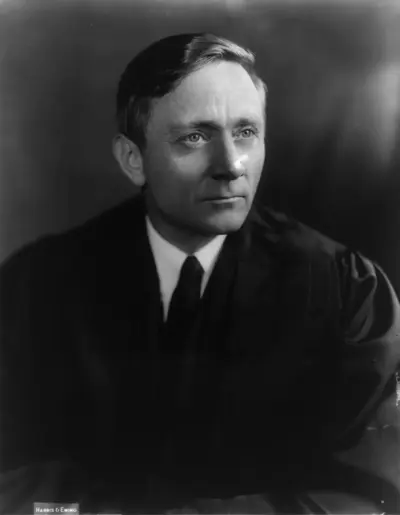
William Orville Douglas was an American jurist and politician who served as an associate justice of the Supreme Court of the United States. Nominated by President Franklin D. Roosevelt, Douglas was confirmed at the age of 40, one of the youngest justices appointed to the court. His term, lasting 36 years and 211 days (1939–75), is the longest in the history of the Supreme Court. In 1975, Time magazine called Douglas "the most doctrinaire and committed civil libertarian ever to sit on the court."
