James McHenry Quotes
Bibles are strong entrenchments. Where they abound, men cannot pursue wicked courses, and at the same time enjoy quiet conscience.
Steiner, Bernard Christian. The Life and Correspondence of James McHenry, Secretary of War under Washington and Adams. The Burrows Brothers Company, 1907, p. 600.


This was a poem on copyright infringement which he held wrong. In American history, there has always been a significant part of the American population who were opposed to copyright on both moral and public policy grounds. In the first decades of existence, the United States did not legally recognize copyright. American publishers copied and republished English works with no compunctions. Benjamin Franklin was one of the worst offenders for people who saw it as an offence. English publishers and some American authors lobbied heavily in America and finally got Congress to pass copyright legislation. However, with every new technology, the battle is fought anew, and large numbers of Americans will use copyrighted material contrary to existing law and feel morally justified in doing so, Publishers and other owners of intellectual property then over compensate and they have lobbied heavily to stop what they call piracy by impinging what used to be the legitimate rights of consumers, readers and scholars—even those who were not violating copyright. It is another of those American political issues that never gets settled and is battled in almost every generation.


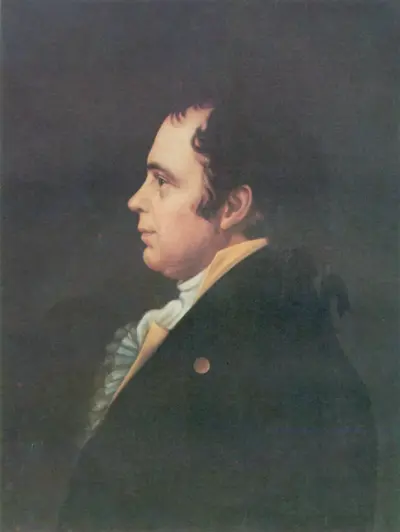
James McHenry was a Scotch-Irish American military surgeon and statesman. McHenry was a signer of the United States Constitution from Maryland, initiated the recommendation for Congress to form the Navy, and was the eponym of Fort McHenry. He represented Maryland in the Continental Congress. He was a delegate to the Maryland State Convention of 1788, to vote whether Maryland should ratify the proposed Constitution of the United States. He served as United States Secretary of War from 1796 to 1800, bridging the administrations of George Washington and John Adams.
