Walter Cronkite Quotes
Beyond being timely, an obituary has a more subjective duty: to assess its subject's impact.
Cronkite, Walter. Introduction. The New York Times Book of Great Obituaries. Black Dog & Leventhal, 2001.


The Civil Rights Bill of 1964

Everett, considered a great orator, spoke at Gettysburg before Lincoln, but he went on for 2 hours. Hardly anyone recalls his speech. His complement was contemporary praise indeed and right on in the view of Americans of future generations.


Matteotti gave a two hour speech in the Italian Parliament denouncing the Fascists and their strong-arm tactics, political assassinations, and election rigging. Eleven days later he was assassinated.

We have come to Paris He had come to Paris with his pupil Wilhelm von Humboldt to personally witness what he regarded as a great event in the history of mankind.


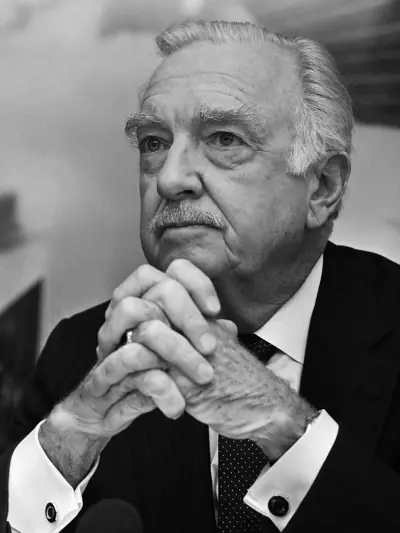
Walter Leland Cronkite Jr. was an American broadcast journalist who served as anchorman for the CBS Evening News for 19 years (1962–1981). During the 1960s and 1970s, he was often cited as "the most trusted man in America" after being so named in an opinion poll. Cronkite reported many events from 1937 to 1981, including bombings in World War II; the Nuremberg trials; combat in the Vietnam War; the Dawson's Field hijackings; Watergate; the Iran Hostage Crisis; and the assassinations of President John F. Kennedy, civil rights pioneer Martin Luther King Jr., and Beatles musician John Lennon. He was also known for his extensive coverage of the U.S. space program, from Project Mercury to the Moon landings to the Space Shuttle. He was the only non-NASA recipient of an Ambassador of Exploration award. Cronkite is known for his departing catchphrase, "And that's the way it is", followed by the date of the broadcast.
