Baruch Spinoza Quotes
Better that right counsels be known to enemies than that the evil secrets of tyrants should be concealed from the citizens. They who can treat secretly of the affairs of a nation have it absolutely under their authority; and as they plot against the enemy in time of war, so do they against the citizens in time of peace.
Spinoza, Benedict de. The Chief Works of Benedict de Spinoza. Translated by R. H. M. Elwes, vol. 1, George Bell and Sons, 1883, p. 343.


Senator Dianne Feinstein, Chairman of the Senate Intelligence Committee, had released an unclassified Summary of the Committee Report on the CIA using torture and perverse treatment of suspect terrorists in the aftermath of the 9-11 attack on New York. Most Republicans argued vehemently that the Report should be classified and kept secret as the CIA behavior was so egregious, unpalatable, and morally reprehensible that there would be negative consequences including perhaps demonstrations and attacks against Americans in foreign countries. Moreover, Terrorist organizations would use the heinous CIA behavior as a recruiting tool for anti-American terrorists. McCain, who had himself been the victim of North Vietnamese torture cited the moral and ethical reasons to prohibit torture but also explained what has been proven over and over again that torture victims will tell the torturer any nonsense that they think the torturer might believe just to get obtain relief from the agony of the torture.


The George W. Bush Administration had initiated a secret wiretapping program without informing the Congressional Intelligence Committees as required by the statute or requesting a change in the law from the Judiciary Committee. New York Times, however, had discovered the program and published its existence. This was the way that Congress found out about the program that seemed to violate the law. The Attorney General however was critical of New York Times, and expressed concern that the press had published secret material.

The Green Party and The Socialist Party had combined in an alliance. This was their publication. In addition to showing that the right to know and freedom of information was a major issue in other industrial democracies as well as the United States, the quotation is particularly interesting because the title of the article was used over 200 years before by none other than the American patriot, Patrick Henry. See {60328}. The phrase has been used many times in many lands since.


There are many things about our enemies which they know that we know which are still kept classified because it would be embarrassing for the government, a previous administration or to an agency to reveal it. There are some documents that are classified even thought the enemy knows we have the information because if the document were released the enemy might find out the sources of the information which they do not know. However often they know that too. Potential embarrassment and scandal are the main reasons for keepingthings that the enemy knoews we know secret.


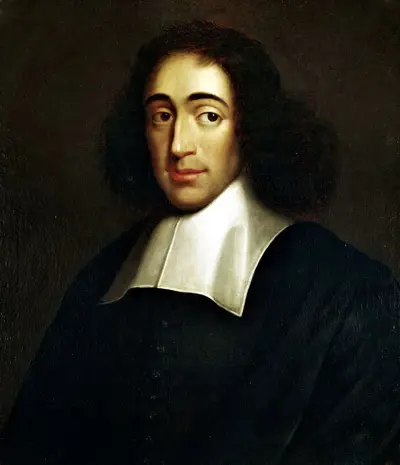
Baruch (de) Spinoza was a Dutch philosopher of Portuguese Sephardi origin. One of the early thinkers of the Enlightenment and modern biblical criticism, including modern conceptions of the self and the universe, he came to be considered one of the great rationalists of 17th-century philosophy. Inspired by the groundbreaking ideas of René Descartes, Spinoza became a leading philosophical figure of the Dutch Golden Age. Spinoza's given name, which means "Blessed", varies among different languages. In the Netherlands he used the Portuguese name Bento. In his Latin and Dutch works, he used Latin: Benedictus de Spinoza.
