Max Stirner Quotes
Before the sacred, people lose all sense of power and all confidence; they occupy a powerless and humble attitude toward it. And yet no thing is sacred of itself, but by my declaring it sacred, by my declaration, my judgment, my bending the knee; in short, by my - conscience.
Stirner, Max. The Ego and His Own. Translated by Steven T. Byington, Benjamin R. Tucker, 1907, p. 94.


There is irony in this act and statement. The film was censored because it was a defamation to Jesus Christ, who the Muslims recognize as a holy Prophet. See {620971} . However, ultra-fundamentalist Muslim clerics preach hate and desecration of Christianity, Judiasm, and Hinduism commonly. None are ever prosecuted in Pakistan. Books and pamphlets excoriating Christian, Jewish, Hindu and Bhai prophets are common place in Pakistan. Ironically, this banned film was called for by the Catholic Church.


This happened to be the famous Colored Regiment depicted so well in the movie, Glory. However, these sentiments were also given to other soldiers in the state. Fighting against slavery was not only the patriotic thing to do, not only the humane thing, not inly the civilized thing to do, but it was a Christian Religious duty. Similar sendiment can be seen much in speeches and literature of the time. The words of the Battle Hymn of the Republic is another example. Ending slavery was a Holy requirement of God.


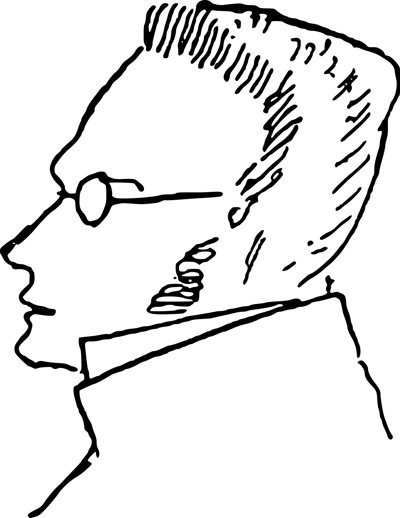
Johann Kaspar Schmidt, known professionally as Max Stirner, was a German post-Hegelian philosopher, dealing mainly with the Hegelian notion of social alienation and self-consciousness. Stirner is often seen as one of the forerunners of nihilism, existentialism, psychoanalytic theory, postmodernism and individualist anarchism.
