Plotinus Quotes
Beauty addresses itself chiefly to sight, but there is a beauty for the hearing too, as in certain combinations so words and in all kinds of music; for melodies and cadences are beautiful; and minds that lift themselves above the realm of sense to a higher order are aware of beauty in the conduct of life, in actions, in character, in the pursuits of the intellect; and there is the beauty of the virtues.
Plotinus. The Enneads. Translated by Stephen MacKenna, Faber and Faber, 1956, p. 56.


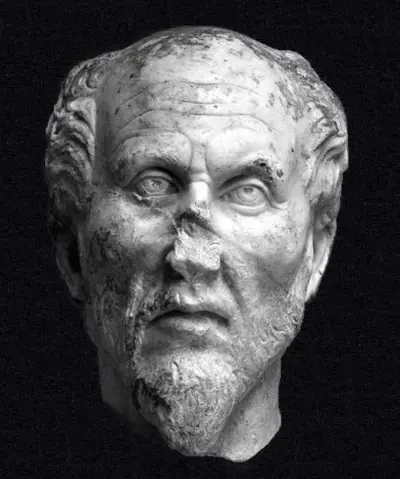
Plotinus (/plɒˈtaɪnəs/; Greek: Πλωτῖνος, Plōtinos; c. 204/5 – 270) was a major Hellenistic philosopher who lived in Roman Egypt. In his philosophy, described in the Enneads, there are three principles: the One, the Intellect, and the Soul. His teacher was Ammonius Saccas, who was of the Platonic tradition. Historians of the 19th century invented the term neoplatonism and applied it to Plotinus and his philosophy, which was influential during Late Antiquity and the Middle Ages. Much of the biographical information about Plotinus comes from Porphyry's preface to his edition of Plotinus' Enneads. His metaphysical writings have inspired centuries of Pagan, Jewish, Christian, Gnostic, and Islamic metaphysicians and mystics, including developing precepts that influence mainstream theological concepts within religions, such as his work on duality of the One in two metaphysical states.
