Akhenaton Quotes
Be thou incapable of change in that which is right, and men will rely upon thee. Establish unto thyself principles of action; and see that thou ever act according to them. First know that thy principles are just, and then be thou.


Samuel Langhorne Clemens, 1835-1910. From the point of view of the person or company that bribes or gives campaign contributions to legislators, there has often been a problem that when the heat is on the legislator might begin to refrain from voting as was expected. Twain was joking in this quotation by using the world “morality” to describe the obligation of the legislator to vote for the interest of the briber or campaign contributor. However, there were several major businessmen who actually saw the bribed legislator as having a moral and ethical duty to continue to protect the interest of the briber.


This is one of the proverbs of King Solomon of the Jews, son of King David.


In the early 21st century America’s world image, credibility, and popularity had plummeted to new lows. The George W. Bush administration spent millions of dollars on public diplomacy – public relations, propaganda, and image building using the techniques of Madison Avenue to change the world perception of America. Veteran diplomats like Kissinger advised that the Bush was going about it backwards. If America did the right things, world opinion would appreciate it and America’s credibility will follow as it has throughout most of the 20th century. Most foreign politicians and journalists tended to agree. It had been Bush’s policies and practices that had been disliked. They were understood, it was argued, and did not need to be better explained—just changed.


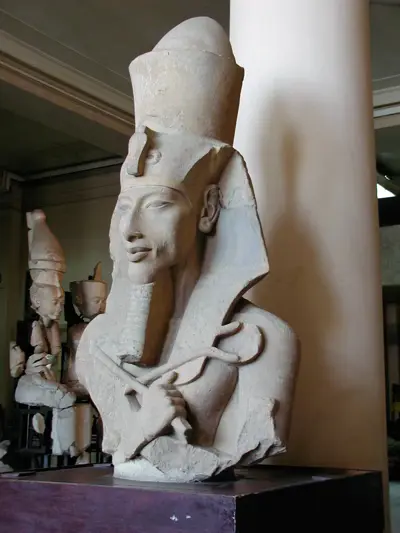
Akhenaten (pronounced /ˌækəˈnɑːtən/), also spelled Echnaton, Akhenaton, Ikhnaton, and Khuenaten (Ancient Egyptian: ꜣḫ-n-jtn, meaning "Effective for the Aten"), was an ancient Egyptian pharaoh reigning c. 1353–1336 or 1351–1334 BC, the tenth ruler of the Eighteenth Dynasty. Before the fifth year of his reign, he was known as Amenhotep IV (Ancient Egyptian: jmn-ḥtp, meaning "Amun is satisfied", Hellenized as Amenophis IV).
