George Herbert Quotes
Avoid,Profaneness; come not here: Nothing but holy, pure, and clear, Or that which groaneth to be so, May at his peril further go.
Herbert, George. "Superliminare." The Temple, T. Buck and R. Daniel, 1633.


This is one of the proverbs of King Solomon of the Jews, son of King David.

See Ovid for an earlier variation.

Jefferson was not anti-Christian as some accuse him. He was a great admirer of Jesus’ life and philosophy. He did object to the non-ethical aspects of Christianity, miracles, dogma, organized churches. See {611658}. Jefferson even went so far as to compile his own version of the Bible—New Testament sometimes called the “Jefferson Bible”—where he translated the material and then extracted the ethical principles leaving out everything else.


There is irony in this act and statement. The film was censored because it was a defamation to Jesus Christ, who the Muslims recognize as a holy Prophet. See {620971} . However, ultra-fundamentalist Muslim clerics preach hate and desecration of Christianity, Judiasm, and Hinduism commonly. None are ever prosecuted in Pakistan. Books and pamphlets excoriating Christian, Jewish, Hindu and Bhai prophets are common place in Pakistan. Ironically, this banned film was called for by the Catholic Church.

At the time, the chief executive of these states were called Presidents because they presided over the legislature as well. This proclamation was issued before the Constitutional Convention in 1787 and the later ratification separating church and state. However, even after the Constitution was ratified some states continued to use state law to enforce the Christian Sabbath. That practice would continue in some places until the 2nd half of the 20th century.

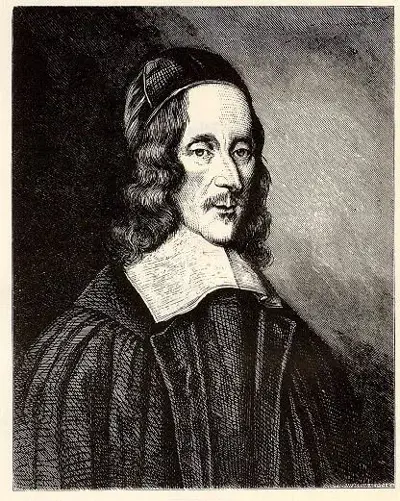
George Herbert was a Welsh-born poet, orator, and priest of the Church of England. His poetry is associated with the writings of the metaphysical poets, and he is recognised as "one of the foremost British devotional lyricists." He was born into an artistic and wealthy family and largely raised in England. He received a good education that led to his admission to Trinity College, Cambridge, in 1609. He went there with the intention of becoming a priest, but he became the University's Public Orator and attracted the attention of King James I. He served in the Parliament of England in 1624 and briefly in 1625.
