Thucydides Quotes
Athens' biggest worry was the sheer recklessness of its own democratic government. A simple majority of the citizenry, urged on and incensed by clever demagogues, might capriciously send out military forces in unnecessary and exhausting adventures.


While Jefferson appreciated Jackson’s military prowess, that was about all.


“Personal government” meant to him charismatic individuals and demagogues who came to power in a republic and led it into a dictatorship. As opposed to representatives of political parties where a single individual could not control everything. However, this was before Adolf Hitler and his political party—the Nazis—came to power by election and turned Germany into a dictatorship. It takes more than structure to preserve democracy.


The Nigerian Government was very slow in making a policy to protect communities against the Boko Haram, fundamentalist Islamic terrorists. The Nigerian army was totally corrupt with no interest in risking their lives, so they would rarely go after the terrorists or interpose themselves between the terrorists and their targets even when they had advance knowledge.


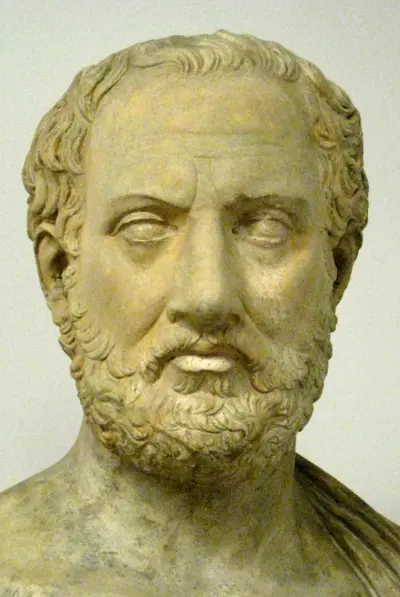
Thucydides (/θjuːˈsɪdɪdiːz/; Ancient Greek: Θουκυδίδης Thoukūdídēs [tʰuːkyːdídɛːs]; c. 460 – c. 400 BC) was an Athenian historian and general. His History of the Peloponnesian War recounts the fifth-century BC war between Sparta and Athens until the year 411 BC. Thucydides has been dubbed the father of "scientific history" by those who accept his claims to have applied strict standards of impartiality and evidence-gathering and analysis of cause and effect, without reference to intervention by the deities, as outlined in his introduction to his work.
