Fyodor Dostoevsky Quotes
At some thoughts one stands perplexed, especially at the sight of men's sin, and wonders whether one should use force or humble love. Always decide to use humble love. If you resolve on that once for all, you may subdue the whole world.
Dostoevsky, Fyodor. The Brothers Karamazov. Translated by Constance Garnett, William Heinemann, 1912, p. 339.


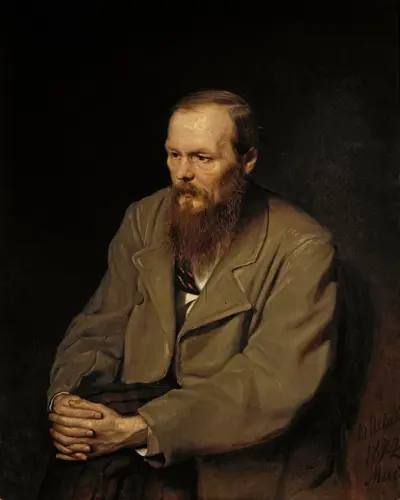
Fyodor Mikhailovich Dostoevsky, sometimes transliterated as Dostoyevsky, was a Russian novelist, philosopher, short story writer, essayist, and journalist. Dostoevsky's literary works explore human psychology in the troubled political, social, and spiritual atmospheres of 19th-century Russia, and engage with a variety of philosophical and religious themes. His most acclaimed works include Crime and Punishment (1866), The Idiot (1869), Demons (1872), and The Brothers Karamazov (1880). Dostoevsky's body of works consists of 12 novels, four novellas, 16 short stories, and numerous other works. Many literary critics rate him as one of the greatest psychological novelists in world literature. His 1864 novel Notes from Underground is considered to be one of the first works of existentialist literature.
