Mao Zedong Quotes
At no time and in no circumstances should a Communist place his personal interests first; he should subordinate them to the interests of the nation and of the masses. Hence, selfishness, slacking, corruption, seeking the limelight, and so on, are most contemptible, while selflessness, working with all one's energy, whole-hearted devotion to public duty, and quiet hard work will command respect.
Mao, Zedong. "The Role of the Chinese Communist Party in the National War." Selected Works of Mao Tse-tung, vol. 2, Foreign Languages Press, 1965, p. 198.


The Treasury Secretary had discovered a massive fraud between some whiskey distillers and some government officials whereby the government was defrauded of millions of dollars of tax revenue. One of the Federal officials Bristow wanted to indict was O. E. Babcock, the President’s personal secretary and advisor. Bristow marshaled the facts and sent a report to Grant who wrote the quoted material in the margin of the report and sent it back to Bristow. Despite Grant’s lack of personal involvement and his immediate willingness to prosecute his close friend and colleague, the stain of scandal spread to Grant and to this day is a part of any discussion of his presidency.


The job of the Community Relations Service was to provide mediation and other services to promote voluntary desegregation in communities. Most Southern politicians were urging non-compliance with the Civil Rights Act, and to be a federal official who tried to persuade Southerners to desegregate was not good for a political career. Collins, to his great credit, accepted the President’s offer. Johnson’s “sales pitch” was the altruistic and patriotic side of the President which often gets overshadowed by his political machinations.


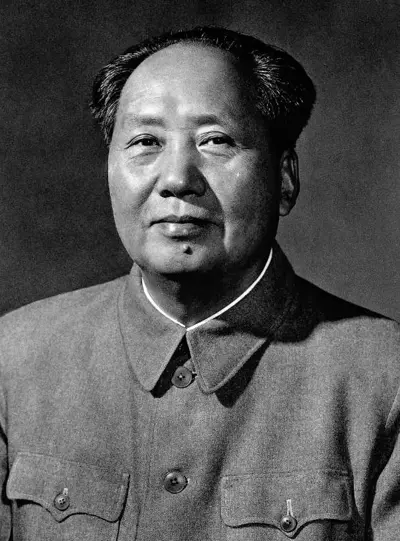
Mao Zedong, also known as Chairman Mao, was a Chinese communist revolutionary who was the founder of the People's Republic of China (PRC), which he ruled as the chairman of the Chinese Communist Party from its establishment in 1949 until his death in 1976. Ideologically a Marxist–Leninist, his theories, military strategies, and political policies are collectively known as Maoism.
