Whittaker Chambers Quotes
At issue in the Hiss Case was the question whether this sick society, which we call Western civilization, could in its extremity still cast up a man whose faith in it was so great that he would voluntarily abandon those things which men hold good, including life, to defend it.
Chambers, Whittaker. Witness. Random House, 1952, p. 4.


Commenting on a former CIA agent's defection to Russia:


Recipient of the National Security Medal


Donovan had been criticized for utilizing "leftists" for intelligence activities. Precursor to CIA. Donavan was a prominant attorney, banker and financier as well as a Medal of Honor Winner when he was asked to organzie the OSS. America was far behind the axis and even our allies in spy craft. J Edgar Hoover focused the FBI on leftists and had veritually no capability for spying in Western Europe and Asia. Donavan's OSS produced almost all of the actionable intelligence and did a wonderful job in organziaing covert operations. He used people who would normally never be considered by an espionage agency including many scholars, intellectuals, scientists, and entertainers. His agents ranged from Julia Child, the gourmet chef. to Moe Berg, a New York Yankee Baseball Player who spoke many languages. Hoover and some if the military intelligence agencies were jealous of his success and his access to President Roosevelt, and complained about anything they could find and hisi agents were an easy target for their wealth, societal connections, sexual indescretions, liberal politics, Bohemians, upper class right wing politics and culture. None of thus phased Donavan. After the war and FDR's death, Donavan's enemies got the OSS disbanded. Soon, something was needed, and the CIA was organized along the lines of Donavan's recommendations.


War between England and Germany had just commenced.


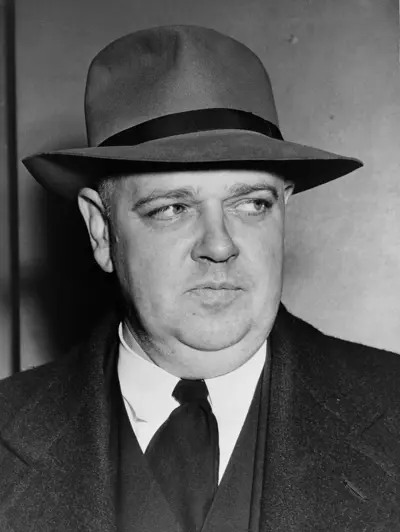
Whittaker Chambers was an American writer-editor, who, after early years as a Communist Party member (1925) and Soviet spy (1932–1938), defected from the Soviet underground (1938), worked for Time magazine (1939–1948), and then testified about the Ware group in what became the Hiss case for perjury (1949–1950), often referred to as the trial of the century, all described in his 1952 memoir Witness. Afterwards, he worked as a senior editor at National Review (1957–1959). US President Ronald Reagan awarded him the Presidential Medal of Freedom posthumously in 1984.
